Undoubtedly, Egypt's security is no longer separate from developments in the Gaza Strip, nor from the balances in Libya or the stability of Sudan. These issues have become so interconnected that any disturbance in one may extend into Egypt, whether through refugee flows, border threats, or indirect economic impacts.
The region is facing a severe accumulation of crises; tensions involving Iran are no longer confined to the Gulf but have become a strategic knot stretching from the Gulf to the Arab Mashreq. At the same time, there is direct and indirect escalation between the United States and Israel on one side and Iran on the other, opening the door to scenarios that cannot be contained within traditional rules of engagement.
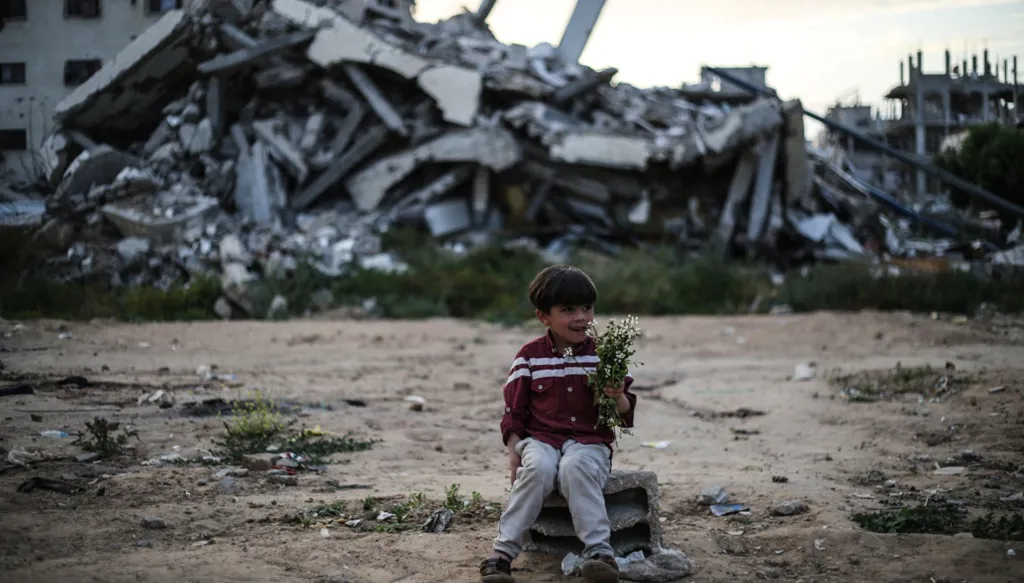
Meanwhile, the tragedy in the Gaza Strip continues as a constant source of volatility, with repercussions extending beyond its narrow geographical borders into southern Lebanon, threatening to widen the conflict into a broader regional level.
Structural flaws in Arab systems
These developments cannot be understood without considering the structural crises affecting several Arab countries such as Libya, Sudan, and Yemen, where the concept of the nation-state is eroding under the pressure of intertwined internal conflicts, political divisions, economic fragility, and external interventions.
These cases are not exceptions but reflect a recurring pattern that points to a deeper flaw in the structure of the regional system itself.
When times change, along with events at this accelerated pace, major concepts are no longer mere tools of interpretation but become subjects of questioning and reconstruction.
The slogans that were born in different historical contexts, tied to specific moments of nationalist rise or particular international balances, can no longer accommodate a regional reality being reshaped through more complex and intertwined interactions.
It is no longer sufficient to reproduce old rhetoric in a scene where levels of conflict intersect in unexpected ways, from the local to the regional and up to the international level.
Thus, the concept of "Arab national security" appears to be undergoing a critical transitional phase and is no longer able to maintain its classical form, which was associated with the idea of a direct external threat or conventional military aggression. It has instead become open to redefinition, with diverse sources of threat and a changing nature.
Security is no longer solely about border protection; it also includes safeguarding the internal cohesion of the state, preserving national identity from fragmentation, and ensuring societal stability in the face of transnational economic, media, and cultural pressures.
A flexible conception of security
This shift reflects a transition from a "rigid" security conception to a "flexible" or "networked" one, where military dimensions overlap with non-traditional aspects such as informational security, economic security, and even cultural security.
The state is no longer the sole actor in this field; other forces have emerged: militias, armed groups, and media influence networks, which possess the desire, and perhaps the power, to reshape power balances and influence government decisions.
Accordingly, danger is no longer measured solely by the ability of an external force to penetrate geographical borders but by its ability to infiltrate the internal structure of the state, affecting citizens’ perceptions and reshaping their priorities, as evident in modern conflict management.
Media warfare, economic pressures, and cyber intrusions now play roles as significant as direct military confrontations. In cases such as Gaza, Lebanon, or Sudan, the distinction between “internal” and “external” exists only in theory, especially as the international system itself is witnessing a decline in regulation and organization, and institutions once considered guarantees for managing or containing conflicts now suffer clear impotence in enforcing fair or even sustainable settlements.
This decline reflects not only an institutional failure but also deeper changes in global power balances, where narrow interests prevail over general rules, alongside a lack of shared international will to manage crises.
Collective frameworks or security independence?
In this context, Arab states face a difficult equation: on one side, the decline in effectiveness of collective frameworks that once formed a shield for joint Arab work, and on the other, increasing pressures forcing them to rely more on their own capabilities or selective alliances, which may be temporary or shifting, raising serious questions about the future of joint Arab action and its ability to adapt to this changing environment.
Therefore, the question is no longer whether the concept of "Arab national security" still exists, but how to redefine it to make it more capable of explaining reality and more effective in dealing with it, as the region stands at a moment of reshaping that does not allow nostalgia for the past but instead imposes the necessity of thinking about the future, with new tools and more complex and flexible visions.





 Messenger
 Whatsapp
 Threads
 Email
Email
 Print
Print
 X
X
 Facebook