

The limits of expansion: Nation states, illusions of influence, and the cost of ambition
In an era defined by sovereignty, connectivity, and development, external expansion increasingly collides with the economic and political realities of the modern international system.



 Messenger
 Whatsapp
 Threads
 Email
Email
 Print
Print
 X
X
 Facebook


The world today is no longer large enough for imperial projects, those that dominated for centuries before gradually receding in the face of the rise of the modern nation state concept.
The era of forced expansion, direct imposition of influence, and the appropriation of peoples’ resources has ended for more than a century now. This is not only due to political changes, but also to a deep transformation in the structure of the international system.
This system, despite all its flaws, is now based on the recognition of sovereign nation states and their protection within the framework of international legitimacy, even if only in a relative sense.
It is true that the emergence of the nation state was not easy and was marked by conflicts and divisions, yet it has become today the fundamental unit in international relations.
Membership in the United Nations, mutual recognition between states, and the existence of an international legal framework have all made it difficult to turn back the clock to the era of empires.
The Ukraine model
The Ukrainian experience offers a clear example of this shift. Russia, as a major power possessing vast traditional tools of force, attempted to restore what it considers its historical sphere of influence through direct military power.
However, after four years of war, it has not been able to fully achieve its objectives. The reason is not only the resistance of the Ukrainian people, but also the existence of an international environment that rejects the idea of absorbing an independent state. This rejection is not merely moral, but also political and strategic, because allowing such a precedent would open the door to uncontrollable international chaos.
The Iranian regime
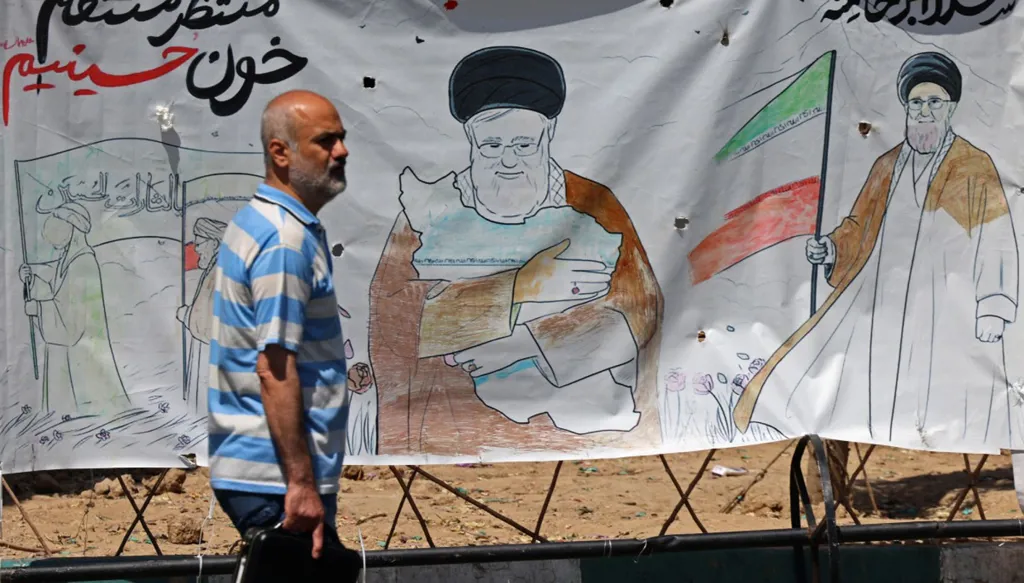
In this context, some regional projects, and in particular what Iran claims regarding its right to a regional sphere of influence or ownership of an international waterway such as the Strait of Hormuz, appear as if they are living outside historical time.
Iran, whether under the Shah or under the current regime, has in different ways adopted the idea of regional expansion. In the first phase, the project had a nationalist character, aiming to restore Iran’s historical role as a major regional power, which is an illusion. In the second phase, the project took on a nationalist and sectarian dimension, where the sectarian element was used to expand influence beyond borders, which is another illusion.
It seems that Iran under this system is drawn to illusions. We may recall the statement of Mahmoud Ahmadinejad, the sixth president of the Islamic Republic, who served from 2005 to 2013 and whose presidency was challenged by the Green Movement in 2009.
On two occasions, speaking from the United Nations podium, he said that the reason for drought in Iran was that the West was stealing clouds from Iran’s skies. At the time, the hall reportedly erupted in sarcastic laughter. Yet the issue of clouds still lingers in the mindset of decision makers in Tehran, who no longer promote an arrogant nationalist discourse or an appetite for expansion, but rather a mythical discourse detached from reason and logic.
Expansionism, no longer a viable project?
The pursuit of building a sphere of influence that goes beyond the borders of the nation state, regardless of how its slogans change, collides with a fundamental reality, which is that the world no longer accepts expansionist projects. There are no longer empty spaces to be filled without resistance, and peoples no longer accept becoming part of an external project regardless of its justifications.
More dangerously, such expansion projects are not only costly for others, but also for those who pursue them. The resources spent on external expansion are often taken at the expense of internal development. The economy is severely affected, social stability is shaken, unemployment increases, poverty spreads, and the state enters a constant state of exhaustion.
This is clearly visible in multiple experiences where external power turns into an internal burden. Iran is no exception, no matter how powerful its decision makers are, especially when repression is imposed on large segments of its society.
Historical experience confirms this reality. The Soviet Union, despite its immense military power, collapsed in part due to the cost of external expansion and its inability to keep pace with economic development. Other countries have followed a similar path, discovering too late that building influence cannot be a substitute for building the state itself.
In the Iranian case, the contradiction is particularly clear. It is a state with significant human and economic resources, yet it directs an important part of these resources toward external projects that do not provide a direct return to its citizens.
This approach not only conflicts with the logic of the nation state, but also with the requirements of development in the modern era. Moreover, marketing these projects under different slogans is no longer sufficient to conceal their reality.
A stronger sense of nationalism
Societies are becoming more aware, the world more interconnected, and information more widespread. It is no longer easy to convince populations that external expansion is a path to internal prosperity.
In contrast, the general global trend is moving toward strengthening the concept of the nation state, not in the sense of isolation, but in the sense of building a state capable of meeting the needs of its citizens and engaging in the international system as a partner rather than a dominant power. This is the path that has produced tangible success in many experiences, from East Asia to Europe.
It is evidence that the successful path for states is completely at odds with the Iranian project as described here, and the more decision makers come to realize this simple fact, the closer the region moves toward real peace, after a long period of hollow slogans.
Disclaimer: The opinions expressed by the writers are their own and do not necessarily represent the views of Annahar