

Iran-US deadlock deepens as sanctions, Hormuz, and nuclear demands collide



 Messenger
 Whatsapp
 Threads
 Email
Email
 Print
Print
 X
X
 Facebook


US President Donald Trump had barely rejected the next to last Iranian proposal when the Pakistani mediator announced that he had received a new proposal, and that another proposal would be ready as soon as the latest one is rejected.
This is what experts call a form of “formal negotiation maze,” used by Tehran to buy time and to create the impression in diplomatic circles that it and Washington are still in a state of “negotiation,” and therefore closer to ending the war than resuming it.
However, negotiating through messages in order to bypass American conditions that do not appear open to revision reinforces stagnation, produces no results, and does not push back the threat of war.
As for the strategy of buying time, it is not clear what Iran can gain from it. It is true that it is worsening losses in the energy crisis and the global economic crisis, but the countries affected blame both sides of the war for this situation.
Although most countries, at least in prinicple, support punishing Iran for its aggressive behavior, especially toward the Gulf region and the Arab surrounding, the way the United States has managed the war, relying on Israeli planning, has prevented the formation of an international or even regional coalition to support it.
The United States has sidelined its most important traditional allies, and Donald Trump responded to their criticism with unprecedented insults. It has also left its closest partners in the region to absorb strikes and bear losses, yet still expects them to share the cost of the war as if it had been started at their request or for their benefit, without clarifying how it will end or on what basis.
The “day after” remains unknown, and the latest statement from the Islamic Revolutionary Guard Corps in the name of Mojtaba Khamenei revisits its approach to the Arab Gulf in a condescending tone detached from reality.
American deliberations about available options to break the deadlock, along with the transfer of tons of ammunition to Israel, have increased the likelihood of a return to war, but without calling it a “war” and instead referring to it as “military operations” with Israeli participation.
This is because the Trump administration wants to structure its avoidance of accountability in Congress, since a “war” requires authorization if it exceeds sixty days, whereas “operations” are not subject to such restrictions and can include targeting sites that were not struck in the first forty days, as well as assassinations, ground raids, and partial implementation of earlier threats to bomb bridges, power stations, and oil facilities.
Confirming this direction, Trump was keen to inform Congress that “the war is over,” and he considers it finished because, in his view, it has achieved its military objectives. If that were truly the case, he would not be interested in negotiating to obtain a political agreement.
While Tehran says that the United States will not achieve through negotiations what it failed to achieve through military force, it aligns with sources within the American administration who believe that all Iranian proposals have failed to meet Trump’s “conditions,” which is why he is refraining from formally declaring the end of the war.
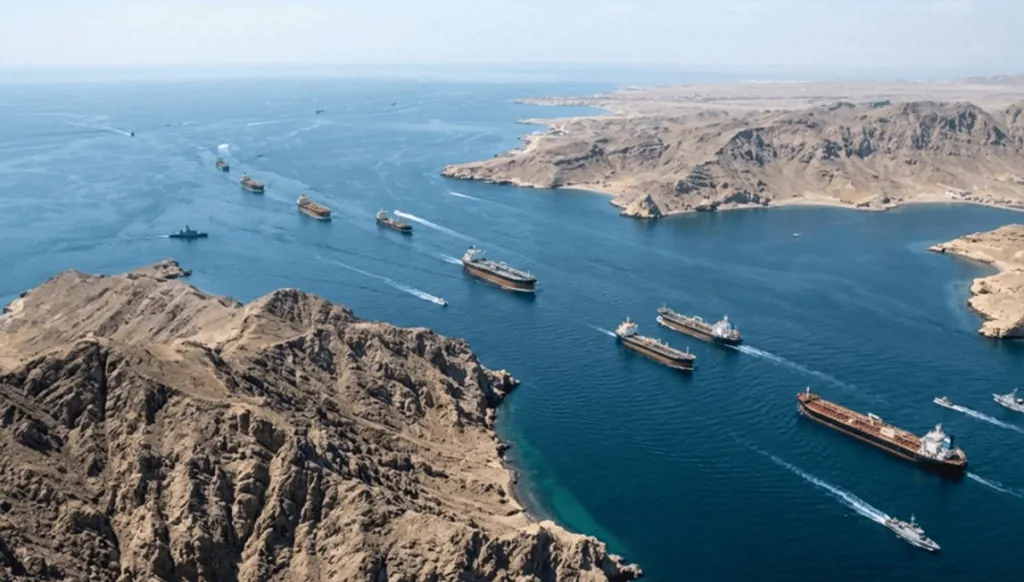
Before the war, the nuclear program was the main point of contention. As Tehran adopted a strategy of “prolonging the war” by closing the Strait of Hormuz to create international disruption for Washington, a maritime blockade of Iranian ports was added, making the strait another major point of contention.
Tehran had conditioned ending the war on entering negotiations and therefore obtained a ceasefire, but the round of talks in Islamabad failed. With the extension of the ceasefire, the US imposed a blockade on Iranian ports, which weakened Iran’s “strong card” of the Strait of Hormuz, but it also worsened the global energy crisis and its worldwide consequences.
Iran also demanded “guarantees” that the war against it would not be resumed, and be compensation for its losses, while threatening to impose fees on ships passing through the Strait of Hormuz if compensation was not provided, which it considers unacceptable. However, it did not respond positively the three American conditions: stopping uranium enrichment for twenty years, committing not to seek nuclear weapons, and handing over its stockpile of highly enriched uranium.
In the latest proposals, Iran attempted a trade-off based on “ending the war with guarantees”: full reopening of the strait in exchange for lifting the blockade on ports, and later negotiations after the war on restrictions to the nuclear program in exchange for a full lifting of sanctions.
It was clear to the American side that Iran’s current priority is lifting the blockade, since it has imposed for the first time a “zero oil exports” situation for the third consecutive week. If Washington accepted the trade-off and agreed to postpone the nuclear issue, Tehran would resume oil exports but would harden its position on nuclear conditions. For this reason, Washington decided to maintain and tighten the blockade, with Trump even describing it as “more effective” than military strikes.
This blockade provided Trump with a temporary way out, just as the successive proposals appeared to be a partial way out for Iran. However, the deadlock persists for both sides, as what is expected from negotiations does not allow either party to claim “victory.” Returning to “hostile operations” increases pressure on the leadership in Tehran, but it is unclear what targets could be struck in a way that would be truly painful and decisive.
Meanwhile, Trump shows confidence that does not hide his frustration that things are not moving at the pace he wants. He has therefore returned to demanding Iran’s “unconditional surrender,” or threatening that “we will destroy it or reach a deal with it.” As for Israel under Netanyahu, it continues its crimes in Lebanon and is preparing for a new bloody phase in the Gaza Strip.
Disclaimer: The opinions expressed by the writers are their own and do not necessarily represent the views of Annahar.