

Iran’s internal contradictions and the struggle over a national narrative
Despite official claims of misunderstanding from abroad, internal crises, political marginalization, and recurring protests reveal deep tensions between the state’s ideological framework and Iran’s diverse society.



 Messenger
 Whatsapp
 Threads
 Email
Email
 Print
Print
 X
X
 Facebook
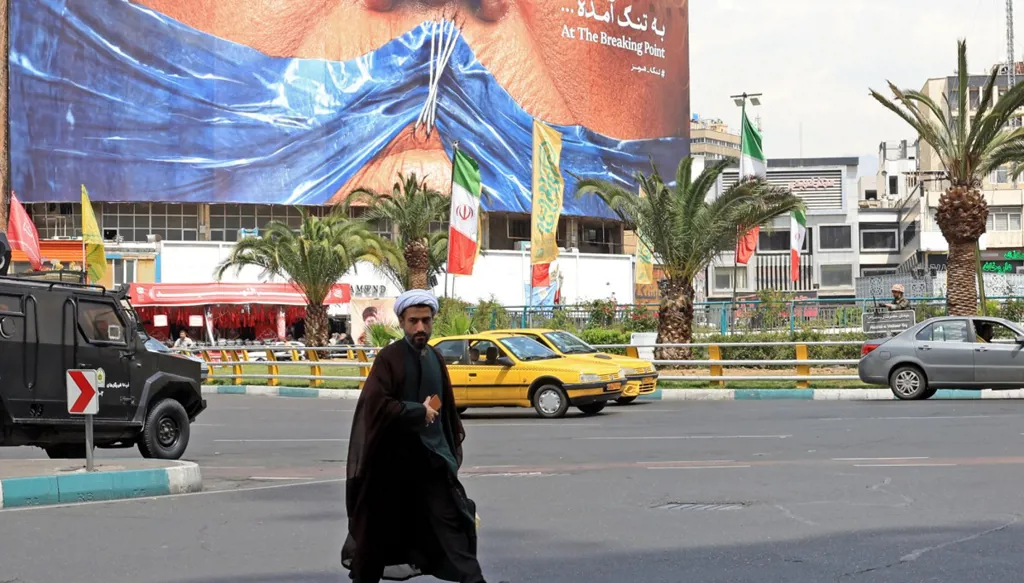


The Iranian media machine promotes the idea that the regional and international environment misunderstands Iran and its system. However, these accusations and concerns are not imaginary.
The crises inside the country reveal that the worries of surrounding states are well founded. For this reason, it is not easy for them to accept calls for dialogue that appear to be a trap set by a system whose voice is louder than that of its own people, since the determinants of domestic policy are the same as those of foreign policy. Can someone who suppresses his own people truly speak about pluralism?
This is not an exaggeration. Former President Hassan Rouhani, who struggled under the control of hardliners and whose government faced obstacles from parallel powers, is clear evidence of the crisis within the Iranian system. He even openly declared that a minority, meaning the hardliners and their supporters, should not control the fate of the majority, the diverse population. He resorted to the constitution established by the system itself, which was meant to address fears inherited from the Pahlavi era, and called for using the right to a referendum to decide on major controversial issues both domestically and internationally.
But what happened? The constitution holds no weight before a system that reduces the Iranian nation to its own structure. Rouhani was even threatened with the fate of the moderate president Hashemi Rafsanjani, who is suspected to have been physically eliminated in a swimming pool in Tehran.
Moderate figures who sought to reform policies that imposed self-isolation on Iran, including Mohammad Khatami, all ended up marginalized and accused of betrayal. This shows that the system sees only through the lens of the doctrine of the Supreme Leader, presenting it to the public under the banner of patriotism, nationalism, and a state defending its interests.
Because of this one-dimensional vision, the conservative government of Ebrahim Raisi, which raised the slogan of prioritizing neighboring countries in its foreign policy on the basis of mutual economic interests, failed to introduce any real change in the nature of its relations with its neighbors, who still find themselves targeted by the Iranian system.
A systematic problem
In reality, the problem lies within this system, not with neighboring countries, which have no issue with the Iranian people. Otherwise, we would not see large Iranian communities in Gulf countries, Turkey, and Europe. These people have found in those countries a space to escape the pressures of their own system.
A separate social reality
If you observe the ongoing nightly gatherings in Iranian squares since the American and Israeli aggression, you will discover a society that is either ignored or deliberately marginalized by its own system through the spread of unrealistic narratives that serve its interests.
While the issue of the hijab had been a point of tension between the system and the people and gave rise to the women’s movement in Iran, the state television now broadcasts the voices of unveiled women to suggest that everyone has come out in support of the system. Yet, beyond the pro regime voices dominating the platforms, one young woman declared, I came for Iran, not for Mojtaba Khamenei.
Here, the narrative promoted by the system begins to collapse. It claims that Iran is the system of the Supreme Leader and that without it the country would fall apart. Even the unity shown by minorities in the face of aggression was in support of Iran itself, although the system insists on portraying that support as loyalty to its religious structure.
The battle for an alternate national narrative
What hardliners fail to recognize is that Iran, with its diversity and its position at the crossroads of geography and cultures, cannot accept a misleading narrative that presents national independence as stemming from hostility toward the West.
Moderates have realized that the system is built on opposition to its predecessor, the Pahlavi system, which looked to the West for progress under the banner of Aryan nationalism.
Today, however, new generations in Iran seek to move beyond both models: the imperial Aryan Iran and the Iran of the Supreme Leader. Both have neglected the Iranian people in all their diversity, which is a natural result of Iran’s position along the routes of civilizations.
Disclaimer: The opinions expressed by the writers are their own and do not necessarily represent the views of Annahar.