




 Messenger
 Whatsapp
 Threads
 Email
Email
 Print
Print
 X
X
 Facebook


Traditional populism has always relied on one seductive claim: that a pure and sovereign people has been stripped of its legitimate power by a corrupt elite, and that the populist leader will restore what was taken. What technological populism adds, however, is a new twist that transforms the old trick into something genuinely new and more dangerous.
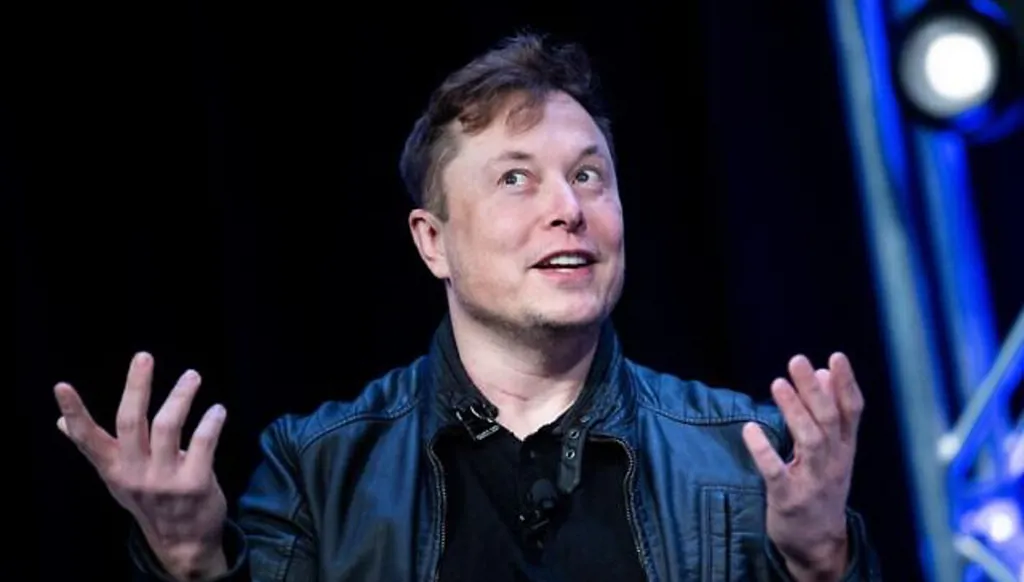
The technological populist does not merely claim to represent the people but claims to have built the tool for their liberation. The algorithm, the platform, and the artificial intelligence system are presented as democratic infrastructure, and criticizing this matrix becomes a betrayal of the people and an alignment with the deep state, as promoted by Elon Musk, Alex Karp, and other figures of techno feudalism.
The genius of this strange mix lies in the way it shields the billionaire from accountability, even from the democratic mechanisms originally designed to hold power to account. By turning criticism into persecution and oversight into repression, the regulatory body investigating the platform is recast as the corrupt elite silencing the people.
The most charitable version of this view suggests that technology does not interpret the will of the people, but reveals it directly, without filtering or mediation, in a direct and democratic way, unlike political debate within institutions, which is marked by procedural delays and elite dominance. This is not accurate when one examines how technology actually works.
The recommendation algorithm that serves you political content does not arise from a collective will of citizens, but is designed, tested, and refined to increase engagement and time spent. What is presented as liberation is, in reality, a process of selection and curation, a highly opaque form of selection.
A fundamental contempt for regulatory institutions
More dangerous still is the deep contempt for politics itself at the heart of technological populism. The technological populist looks at the legislature and sees inefficiency, and at the regulatory body and sees an obstacle. This contempt is not incidental, but structural. What technology does, and what it is designed to do, is remove obstacles, especially for its owners in their pursuit of control and profit, while maintaining the claim that it removes obstacles for the people.
A vague definition of the people
The technological populist constantly speaks of the people yet rarely defines who they are. The people in this context are those who have smartphones, internet access, and the digital literacy required to use recommendation systems, as well as the time to produce content.
The sharing economy, which promises individual empowerment, has in fact created a two-tier system in which a small number of consumers extract significant value, while the vast majority provide unpaid labor in the form of data, attention, and content.
Technological populism therefore does nothing more than reproduce and amplify the structural inequalities embedded in the data on which it was trained.
The 'accountability gap'
In addition, the technological populist benefits from the privilege of an accountability gap. Decisions that shape public life, from the information citizens see, to the individuals classified as security risks, to loan applications that are approved, to job candidates who are selected, are all made within systems that have their own logic, are trained on opaque data, and whose outputs are presented as objective facts rather than judgments open to debate.
Because we are dealing with a closed system, there is no room for discussion, no proposal for modification, and no one to hold accountable. You are left alone with a terms of service document and a customer support email. As a result, you are stripped of agency in the face of a system that is not subject to accountability, under the claim that technology is infallible.
Someone's algorithm is not neutral, has never been, and will never be. The pressing question remains whether we still possess the intellectual and political capacity to confront this emerging form of populism, one equipped with vast tools and resources and, unlike traditional populism, capable of imposing its control over society before taking power.
Disclaimer: The opinions expressed by the writers are their own and do not necessarily represent the views of Annahar.