Today, Hebrew Channel 14 presented a summary of the situation in Lebanon, stating that in southern Litani, “there is no ceasefire; the Israeli army attacks dozens of targets daily and eliminates elements at a higher rate than during the entire Lebanon in the previous ceasefire after the Northern Arrows operation.”
It pointed out that in “northern Litani, the Israeli army significantly restricts its activity, guided by the political level, due to intense American pressure. Limited strikes are conducted only in cases of major threats, and practically no strikes are carried out in Beirut.”
The channel's report stated: "Unlike the situation in the previous ceasefire, when Hezbollah did not dare to respond by firing, the party now repeatedly fires in an attempt to thwart negotiations between Israel and the Lebanese government and impose a new equation. This is considered a significant setback from Tel Aviv's perspective."
The channel noted that "the Israeli army's control over the ground is much better - instead of a limited security strip comprising 5 points near the border, there is now a wider strip ranging between 5 to 10 kilometers deep with dense forces deployed along the front, from the sea to Mount Hermon."
Explosion ruins in Qantara, southern Lebanon (AFP).
The New Strip
It explained that "the new strip provides an excellent response to the wide infiltration threat by Hezbollah, a threat that no longer effectively exists now (with limited infiltration potential remaining but more complicated)."
According to the channel's report, the strip also provides "a good, though not complete, response to the threat of anti-tank missiles that endangered towns; Hezbollah possesses a limited number of missiles with sufficient range to cross the strip and strike inside Israel, but most of its arsenal in this field has become irrelevant. Naturally, soldiers within the strip remain exposed to this type of fire."
It continued: "It provides towns with only a partial response to the threat of FPV drones, which operate via fiber optics at a range of up to 10, perhaps 15 kilometers, sufficient to reach inside Israel, as occurred in the Shomera incident."
The channel explained that the new strip "does not provide northern towns with a solution to the missile threat; this threat has significantly decreased due to the destruction of launch pads and ammunition stores, but it still exists, though on a smaller scale and mainly at short ranges."
It concluded by saying: "Overall, the current situation is insufficient, and in the long run, Israel will have to change it," considering that "the fundamental improvement lies in deeper and more intensive ground control, but the main obstacle is the change of the equation by Hezbollah, supported by American pressure, from a state of unilateral offensive activity by the Israeli army to a state of mutual firing between the parties."





 Messenger
 Whatsapp
 Threads
 Email
Email
 Print
Print
 X
X
 Facebook
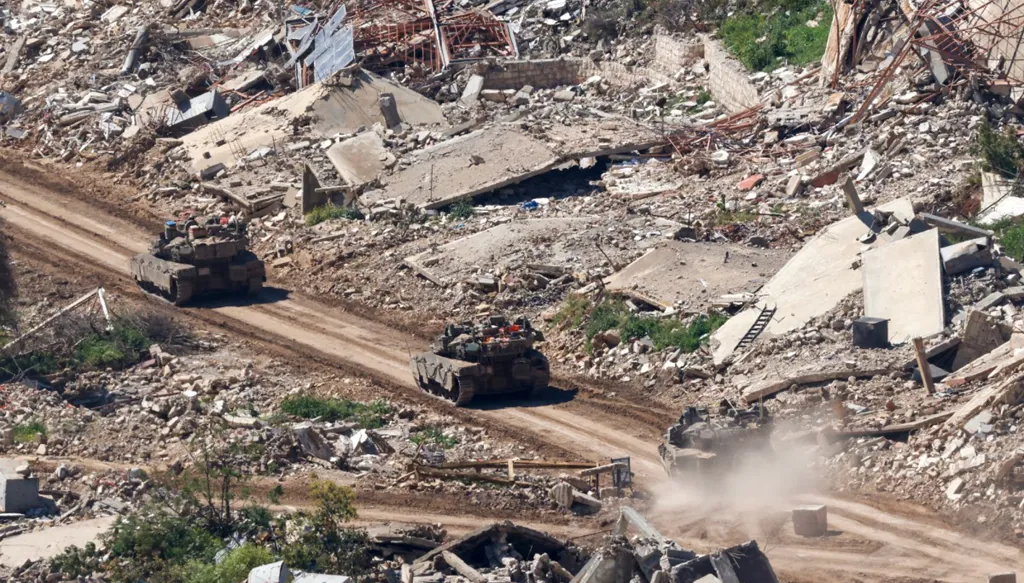


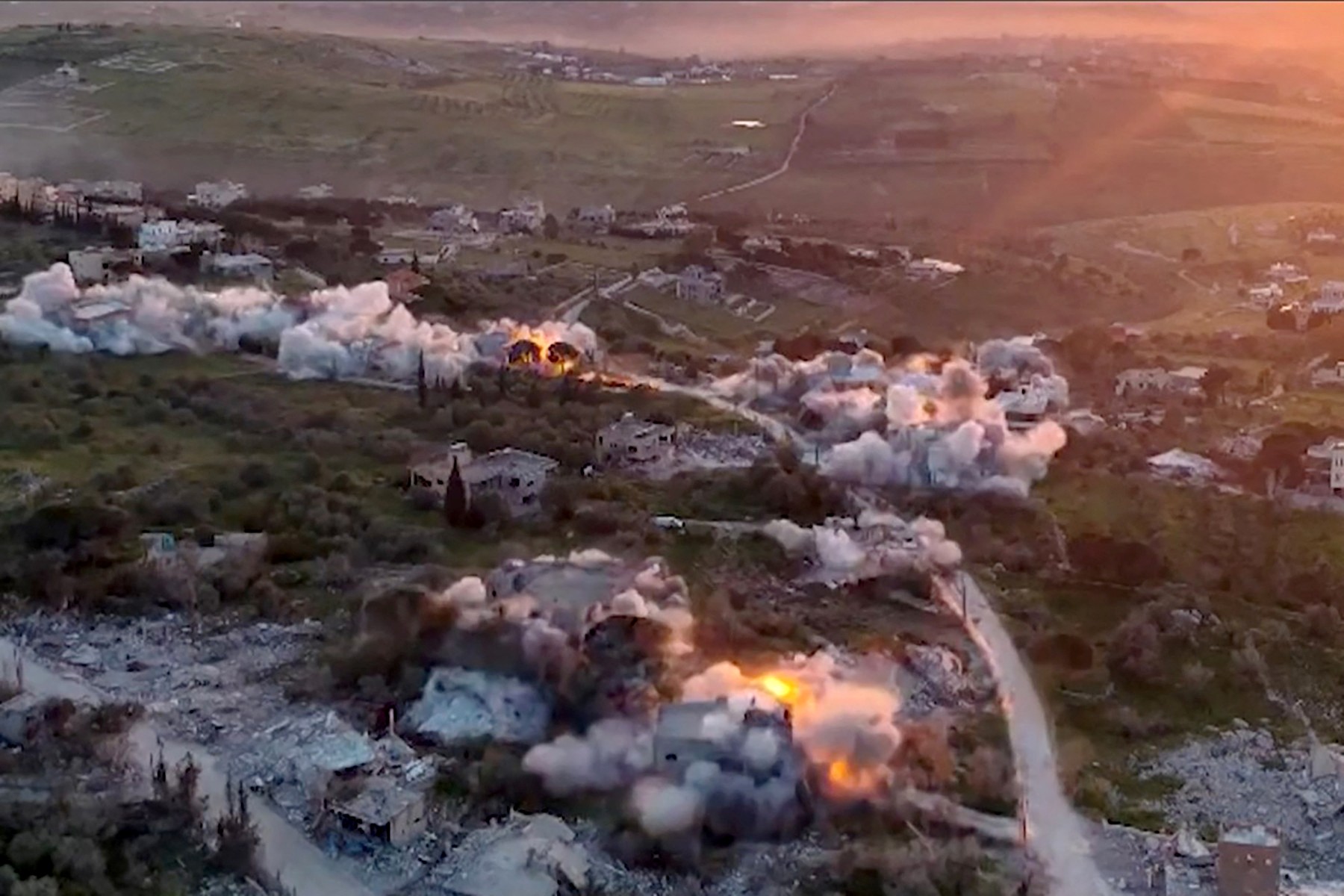 Explosion ruins in Qantara, southern Lebanon (AFP).