

Between escalation and negotiation: The fragile equilibrium in the Hormuz crisis
Iran–US tensions enter a phase of managed confrontation where limited escalation, economic pressure, and stalled diplomacy define a volatile balance that could tip over at any moment...



 Messenger
 Whatsapp
 Threads
 Email
Email
 Print
Print
 X
X
 Facebook
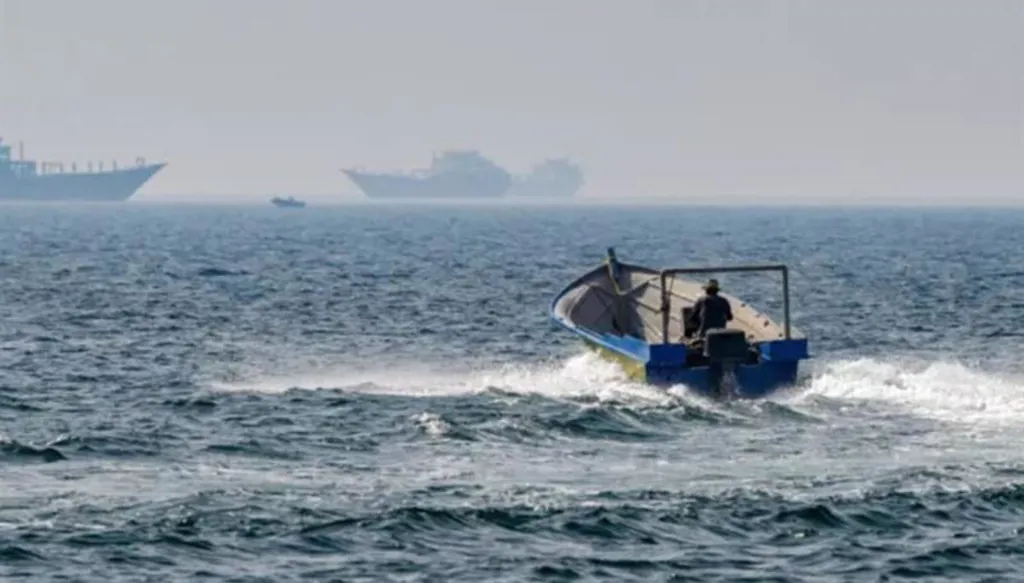


At the moment when Iran proposed opening the Strait of Hormuz in exchange for postponing discussions about its nuclear program, it was not presenting a de-escalation initiative as much as it was reshaping the rules of engagement.
In essence, the offer does not reflect a desire to end the crisis, but rather an attempt to manage it under different conditions that reduce immediate pressure without touching the core of the conflict.
What reinforced this impression is that this proposal coincided with Iranian expectations of a return to “limited escalation” before negotiations resume, which indicates that we are facing a delicate transitional phase, where escalation is used as a negotiating tool rather than an alternative to it.
A truce without trust
The current overall scene cannot be read through traditional war and peace standards, but rather through a more complex equation: an extended truce without trust, negotiations without breakthrough, and escalation that does not reach the point of explosion.
The United States, under President Donald Trump, extended the ceasefire, but at the same time kept the maritime blockade in place, a clear indication that de-escalation is not a concession but a means of extracting concessions.
On the other hand, Iran has not shown readiness to accept comprehensive conditions; instead, it has sought to break down issues, attempting to separate the maritime crisis from the nuclear file, something Washington rejects as an attempt to empty negotiations of their substance.
This divergence in perspectives reflects the essence of the crisis. Iran wants to reduce pressure without paying the highest price, while the United States seeks to secure strategic gains before any easing of sanctions. Between these two goals, a narrow and dangerous space is formed where events unfold.
What further complicates the picture is that the confrontation is no longer limited to its military dimension, but has expanded into the global economy, as the disruption of navigation in Hormuz has led to instability in energy markets and unprecedented price increases in years, placing the entire world at the heart of the crisis, not on its margins.
Messages of power
In this context, “limited escalation” becomes a logical, almost inevitable option. Modern history of complex conflicts shows that limited strikes are often used to reset the balance before negotiations. They are calculated messages of power that do not aim for decisive victory, but to improve negotiating positions.
Therefore, speaking of an “escalation round” does not necessarily mean the failure of the political process; it may be part of it.
However, this type of escalation always carries a risk that it could, due to error or miscalculation, turn into a broader confrontation, and most actors, if not all, are susceptible to mistakes and misjudgment.
The most likely scenario in the short term is the continuation of this pattern: neither war nor peace. Limited escalation, economic pressure, and indirect negotiations. This can be described as a “tense balance,” where each side has enough power to prevent defeat, but none has enough to achieve victory. Despite its fragility, this balance may persist for a while because it serves a shared need: avoiding full-scale war.
Nevertheless, the possibility of reaching a phased agreement remains, especially if both sides realize that the cost of stagnation has become higher than the cost of partial concessions.
Such an agreement would not be comprehensive but temporary: guarantees for freedom of navigation, limited easing of sanctions, and postponement of the most sensitive issues. Even if achieved, however, it would not end the conflict but merely delay it and give all parties time to reposition themselves.
The greatest danger does not lie in calculated decisions, but in what lies outside them: unintended escalation. In a charged environment where major and regional powers operate in narrow spaces, a maritime incident or proxy escalation could be enough to ignite a new phase of conflict. Here, the problem is not intentions, but the ability to control the pace of events.
What this means is that the Middle East today is not standing on the brink of war, but on the brink of miscalculation. Regional countries, especially in the Gulf, find themselves between two difficult choices: supporting de-escalation while accepting ongoing tension, or facing the risk of sliding into a wider conflict in which they could become the main arena.
As for international powers, they have begun to realize that the crisis is no longer regional, but directly affects the stability of the global economy.
The question is no longer whether war will happen, but how long it can be controlled. What we are witnessing now is not the end of the conflict, but a new phase of it, more complex, more sensitive, and more prone to explosion if the balance is disrupted.
Disclaimer: The opinions expressed by the writers are their own and do not necessarily represent the views of Annahar.