

Rising tensions between Trump and Europe expose deep transatlantic divide
From the war on Iran to Ukraine and NATO, growing political rifts and economic fallout are pushing European leaders into open disagreement with Washington.



 Messenger
 Whatsapp
 Threads
 Email
Email
 Print
Print
 X
X
 Facebook
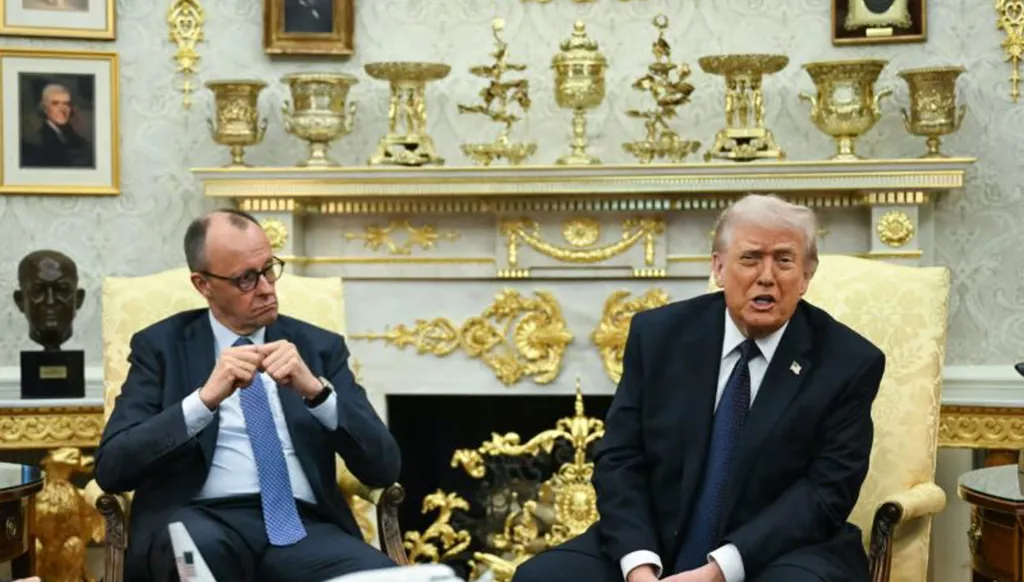


Relations between Europe and the United States are witnessing increasing tension as disagreements grow between European leaders and US President Donald Trump, especially regarding the war on Iran and Ukraine. The recent exchange between Trump and German Chancellor Friedrich Merz reveals the depth of the divide, amid European concerns about Trump’s policies.
Trump announced that he is considering and reviewing the possibility of reducing the number of troops in Germany, which appears to be a response to Merz’s statements that Iran had humiliated the United States.
Germany is the center of the US presence in Europe
Germany is the center of the US presence in Europe, with around 35 thousand American soldiers stationed there. It serves as a hub for medical treatment, aircraft armament and maintenance, and as the headquarters of US forces in Europe. Italy hosts 12 thousand American soldiers, and Britain hosts around 10 thousand. Germany is considered a key NATO ally and has responded to US calls to increase military spending and strengthen its armed forces.
The crisis between the two leaders began when Merz spoke at a meeting in a secondary school in western Germany. He said that it is clear that the Americans do not have a strategy, and that the problem in such conflicts is always that it is not enough to go in, but you also have to come out again. He added that this was seen very painfully in Afghanistan over the course of 20 years, and also in Iraq.
Germany, like other allies, was excluded from consultations conducted by the Trump administration regarding the war on Iran, and it also showed no enthusiasm for joining the fighting, whether individually or as part of NATO. Trump responded angrily, once again hinting that he is reconsidering US participation in the alliance, although he cannot formally withdraw without congressional approval.
The US president was particularly angered by Merz’s comments and accused him of siding with Iran.
Maintaining a good relationship with Trump is difficult
Trump’s recent conflict with Merz shows how difficult it is to maintain a good relationship with the Republican president, especially after the consequences of the war with Iran have made it harder for foreign leaders to stick to their usual approach of trying to win his approval. They increasingly find themselves forced to choose between pleasing him or pleasing their voters, and they appear to be choosing the second option.
During nearly a year in office, Merz invested heavily in strengthening friendship with Trump. He allowed the United States full use of military bases in Germany to launch attacks in the war on Iran, and he allocated minesweeping vessels to patrol the Strait of Hormuz after the war officially ended.
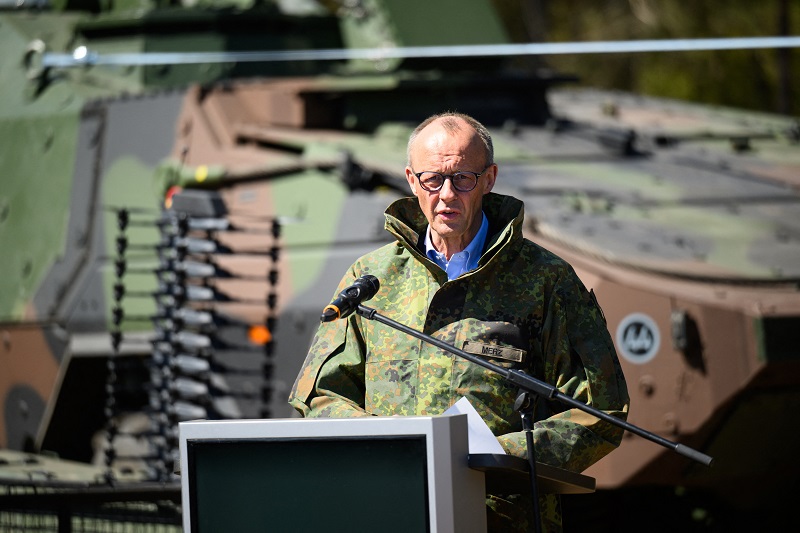
But the war has harmed the German economy and cost Merz politically. Since the start of the war, Merz’s party, the center right Christian Democratic Union, has dropped from first place in national opinion polls and is now behind the far right Alternative for Germany party.
Europe is it rebelling?
Almost every major European leader has, at some point since the start of the war, taken steps to criticize Trump or the war, most notably British Prime Minister Keir Starmer, his key European ally Italian Prime Minister Giorgia Meloni, and Spanish Prime Minister Pedro Sanchez.
European affairs expert Tamam Nour El Din told Annahar that Europe, especially its key states, has for years been engaged in an internal confrontation with hard right movements. He points out that these countries are historically fighting against the return of this model to power, whether through Hitler’s experience in Germany or Marshal Petain’s experience in France, which makes it difficult for European leaders to align themselves with Trump while at the same time declaring that they are fighting extremism within their own countries.
Nour El Din believes that the relationship between the United States and Europe carries a significant degree of competition and mistrust at its core. He notes that Trump deals with European countries separately, country by country, rather than as a unified European Union, pointing out that this approach also extends to his position on NATO, as he considers that the current US administration shows little enthusiasm for defending Europeans as it did in the past.
Nour El Din believes there is an implicit understanding between Trump and Russian President Vladimir Putin that serves the interest of keeping Europe weak. He explains that Washington has scaled back its traditional support for Ukraine and has left Europeans in direct confrontation with Russia. He cites Trump’s recent statements in which he said that Ukraine has lost militarily.
He confirms that Europeans refused to become involved in the war against Iran, considering it to be Trump’s war and one in which they were not consulted. Nour El Din concludes that Trump wants Europe to be a subordinate that carries out Washington’s orders without discussion, but the European continent is now witnessing what resembles a political uprising against his policies, which is clearly reflected in its positions on the war on Iran and the Ukraine file.
The crisis between Trump and European leaders shows that the disagreement is no longer limited to the war on Iran alone but extends to the future of the relationship between Washington and Europe, the role of NATO, and the limits of American influence within the European continent.