Iraq’s labor market under pressure as regional tensions shake investment confidence
Escalating geopolitical tensions and fragile security conditions are driving foreign companies to cut jobs, suspend projects, and reassess their presence in Iraq, raising fears of rising unemployment and deeper economic strain.
The labor market in Iraq is witnessing sharp and complex transformations due to the repercussions of the Iran war that erupted in the region and lasted for approximately forty days. Its effects are still ongoing today amid escalating regional tensions over the past two months, alongside growing fears of the collapse of the ceasefire and the return of confrontations at any moment.
This turbulent situation has not been limited to the security and political dimensions alone but has directly reflected on the structure of the Iraqi economy, particularly on the labor market, which is considered one of the most fragile sectors in the face of geopolitical crises.
Reassessment
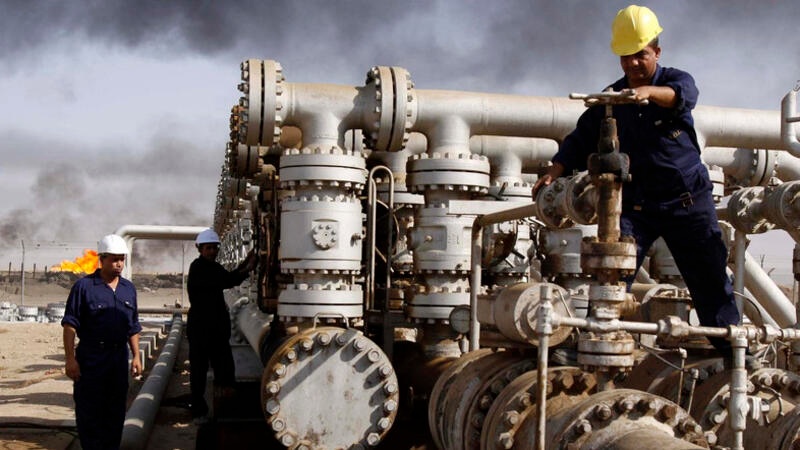
A clear impact has emerged on the activity of companies operating in Iraq, especially foreign ones whose business is closely tied to security and investment stability, particularly in the oil and energy sector. The increasing uncertainty and the growing security risks associated with escalating military operations and reciprocal targeting within Iraqi territory have pushed a number of these companies to reassess their presence. This has led them to reduce their operations or temporarily suspend some projects.
In light of these developments, the effects have begun to appear clearly on the local workforce. Some companies have resorted to laying off a number of employees, especially Iraqi workers, as part of cost cutting measures aimed at reducing operational expenses and limiting risks. Other companies have moved to reduce staff numbers or freeze hiring, as a precautionary step reflecting the level of concern about worsening security conditions, particularly with the escalation of tensions linked to the activity of armed groups and military responses targeting sites in several Iraqi cities.
This overlap between security and economic factors is placing the Iraqi labor market under increasing pressure, in an unstable investment environment and in the absence of clear indicators of near-term stability. This signals further pressure on the workforce, rising unemployment rates, and a decline in job opportunities, especially in vital sectors linked to foreign investment.
Foreign energy companies in Iraq are reassessing their operations. (AFP)
A Difficult Test
Economic affairs expert Nasser Al-Kinani told Annahar that the continuation of the state of tension places the labor market before a difficult test whose impact could extend for years if urgent measures are not taken to contain the crisis. He said that the fragile ceasefire has not ended the state of concern among companies operating in Iraq, especially foreign ones, but has rather deepened their fears regarding the investment environment.
Al-Kinani explained that recent decisions by some companies to reduce their activity or lay off part of their workforce are an initial indicator of deeper transformations that the market may witness in the coming period. He added that sectors linked to foreign investment, particularly oil and energy, are the most affected due to their reliance on a stable security environment and regular supply chains, both of which have been significantly disrupted by the military escalation inside Iraqi territory. He further stated that rising security risks push companies to adopt austerity policies, which are often at the expense of local labor. Layoffs and hiring cuts do not reflect temporary decisions only, but lead to higher unemployment rates, increased pressure on the informal labor market, and a decline in household incomes in Iraq, which in turn affects local consumption and deepens the economic recession.
According to him, the danger is not limited to the loss of current jobs but extends to the disruption of future employment opportunities, in light of investors’ reluctance to launch new projects or expand their activities inside Iraq. He also warned that the continuation of this climate may gradually lead to a loss of confidence in the Iraqi market as an investment destination. He stressed the necessity of urgent government measures, including strengthening security stability, providing guarantees to investors, and launching support programs for affected workers to reduce the impact of the crisis. He added that dealing with this stage requires high coordination between economic and security authorities to prevent the labor market from sliding into a deeper crisis.
A Situational Response Only
On his part, government advisor Aed Al Hilali told Annahar that the Iraqi government is closely monitoring the repercussions of recent regional tensions on the labor market. He noted that the current phase requires careful and balanced management to preserve economic stability and prevent the worsening of the crisis’s impact on the local workforce.
He added that what some companies, especially foreign ones operating in oil and energy sectors, have witnessed in terms of reduced activity or restructuring of some jobs represents a situational response to the rise in geopolitical risks, and is not necessarily an indication of a broad withdrawal from the Iraqi market. He confirmed that the government is in continuous contact with these companies to ensure the continuation of their operations and to reduce the impact of their decisions on Iraqi workers.
He also said that the authorities are working to activate a package of measures to support the labor market, including encouraging local investment, facilitating the business environment, and developing programs to address any potential rise in unemployment rates, especially in areas that heavily depend on foreign companies. He emphasized that the government understands the sensitivity of the current stage and seeks to achieve a balance between security requirements and the continuity of economic activity.
The government advisor confirmed that the biggest challenge lies in containing investor concerns, noting that Iraq still possesses strong economic components, primarily the energy sector, developable infrastructure, and a large consumer market. He stated that the government’s core message is that Iraq is committed to protecting investments and providing a safe working environment as much as possible despite the existing challenges.





 Messenger
 Whatsapp
 Threads
 Email
Email
 Print
Print
 X
X
 Facebook