

Work redefined: How generation Z is rewriting the rules of work-life balance



 Messenger
 Whatsapp
 Threads
 Email
Email
 Print
Print
 X
X
 Facebook



Generation Z is redefining its relationship with work, moving away from the traditional model based on long working hours and constant attachment to a job.
For this generation, success is no longer measured by career advancement or reaching leadership positions, but rather by achieving a real balance between professional and personal life, along with continuous opportunities for learning and development.
This shift reflects different priorities: while income remains an essential factor, it is equally important to seek work that has meaning and provides an acceptable level of wellbeing. Within this framework, many aim for what is known as the “triple bottom line”: money, meaning, and wellbeing. It is a delicate equation that is difficult to achieve in traditional work environments, according to a 2025 report by Deloitte.
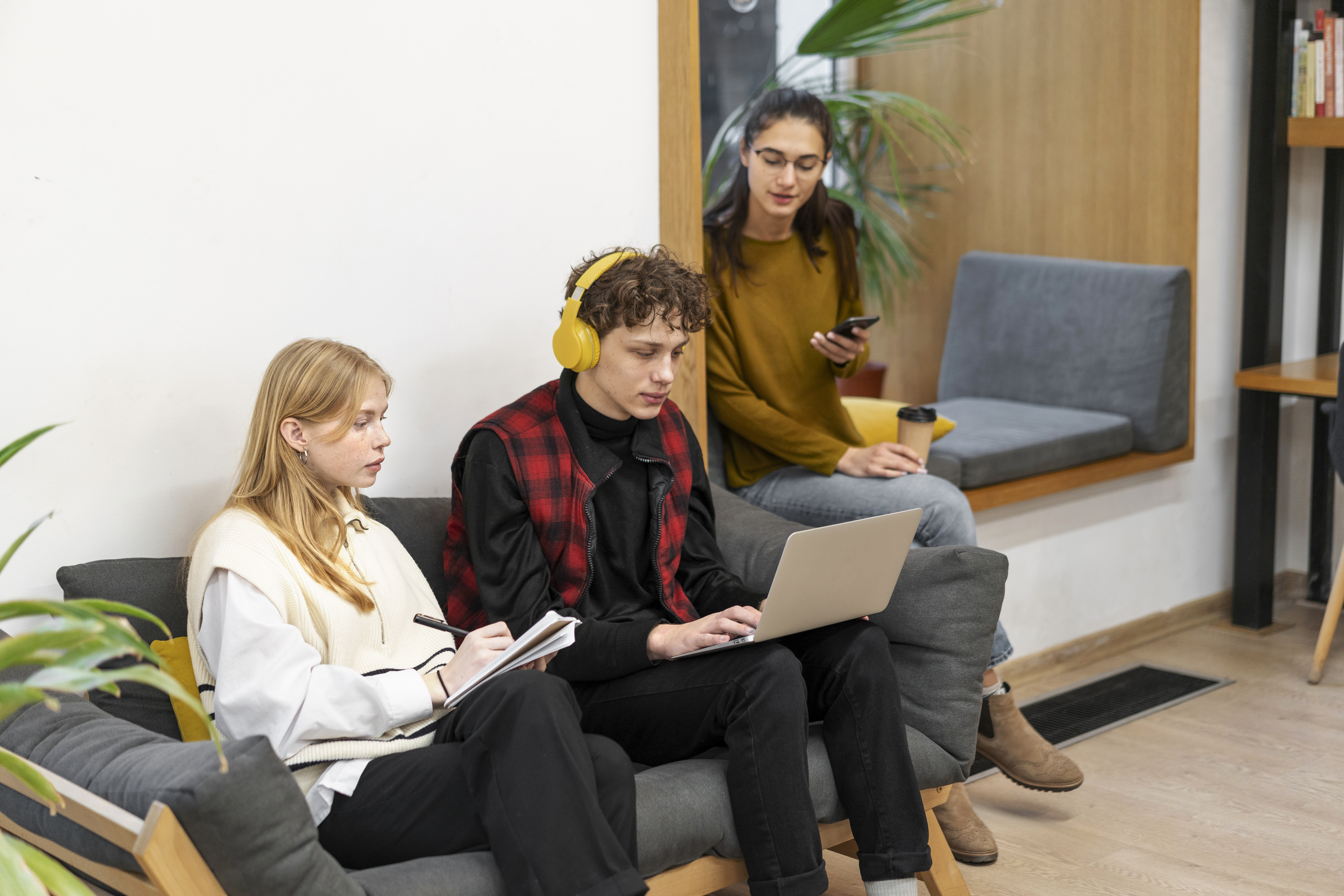
Kareem B.’s experience (a 26-year-old graphic designer) from Generation Z captures this contrast. He works a schedule that runs from 9 a.m. to 5 p.m., six days a week, yet working hours often exceed this framework, reaching between 208 and 234 hours per month.
This continuous extension affects not only time but also the ability to focus and sustain performance, especially in light of studies suggesting that productivity does not necessarily increase with longer working hours, and may in fact decline after a certain threshold.
In contrast, Kareem compares this pattern to his university years, when the rhythm of life was more balanced and clearly defined. His day then ended at fixed times, leaving space for rest and personal activities, without unexpected extensions or constant pressure.
For him, it was not just an academic schedule, but a model closer to the balance he feels is missing in today’s labor market.
From this perspective, a key issue emerges in the prevailing work model. Last minute requests, shifting priorities, and tight deadlines make the boundaries between work and personal life increasingly fragile. After a long working day, the employee is left in a state of ongoing mental exhaustion, which accumulates over time and affects both mental and physical health.

Although this pattern has long been considered part of the professional culture of previous generations, Generation Z is approaching it with greater awareness and resistance.
Time outside of work is no longer seen as secondary, but as an essential part of a holistic lifestyle that includes sufficient sleep, physical activity, a balanced diet, and maintaining social relationships.
In contrast, this generation is proposing a clearer alternative model: fixed working hours that do not extend beyond the workday, a workweek that preserves the meaning of weekends, and a preference for flexible systems that allow an earlier start and earlier finish to the day.
The goal is not to reduce work itself, but to reorganize it within boundaries that ensure sustainability and productivity.
Generation Z is not seeking to move away from work, but rather to place it in its natural position within life. For them, the issue is not a choice between work and life but finding a balance that allows both to coexist within a more stable and sustainable daily rhythm.