Gulf economies are redesigning work itself: Between global talent platforms and national workforce engineering

Opinion 01-05-2026 | 14:36

Gulf economies are redesigning work itself: Between global talent platforms and national workforce engineering

As the Gulf moves beyond oil, the UAE and Saudi Arabia are redesigning the very idea of work—balancing global talent attraction, national employment priorities, and the rise of AI-driven economic transformation.

Gulf economies are redesigning work itself: Between global talent platforms and national workforce engineering
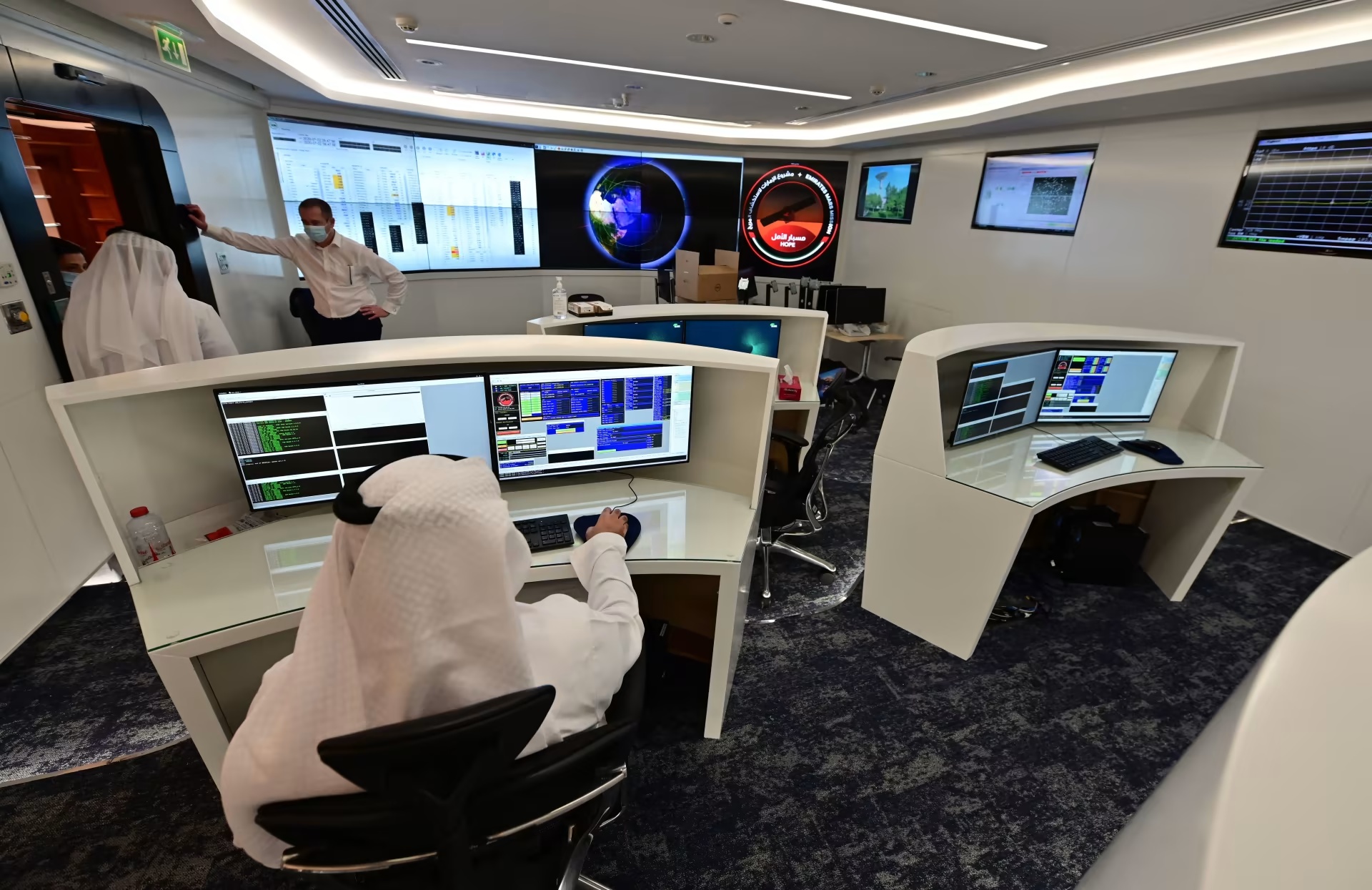
Work environment in the Gulf. (Freepik)
Smaller Bigger


The transformation in the Gulf is no longer merely a shift from an oil economy to a post-oil economy, but a radical redefinition of work itself: who works, how they work, and for what economic purpose.


It is a pivotal moment in which the relationship between the state, the market, and people is being redrawn. At the heart of this moment, two models emerge that do not compete but instead reveal different paths toward the same goal: the United Arab Emirates is building a "global platform for work," while Saudi Arabia seeks to engineer a "national workforce"—both aiming to build an economy suited to the post-oil era, based on productive human capital capable of competing globally and generating sustainable value amid the shift toward a digital and knowledge-based economy.


In the UAE, the restructuring of the labor market is not only driven by administrative decisions but also by its redesign as an independent economic infrastructure.


The state, which aims to double the contribution of the digital economy to its GDP from 9.7 to 19.4 percent within a decade, is not just seeking new jobs but new patterns of work. Hence, it is expanding flexible residency systems, freelance and remote work, and introducing an unprecedented diversity in work permits: 13 types that reflect the deconstruction of the traditional model of fixed employment.


This is not a technical detail but a shift in economic philosophy: from a market that imports labor to a platform that attracts talent, and from an economy dependent on geographical location to one that bets on the ability to attract cross-border human capital.


In this context, artificial intelligence does not become an additional sector but a driver for reshaping the entire market, with estimates that its contribution could reach about 14 percent of GDP by 2030, alongside regional gains estimated at $320 billion.


Yet, this openness does not come without its own limits.


The UAE, which has succeeded in becoming a magnet for global professionals, finds itself facing a delicate equation: how to maintain its international appeal without marginalizing the presence of its citizens in the private sector?


Here, a dual approach clearly emerges—maximum openness to the outside world, contrasted with gradual attempts to enhance localization within. It is not a paradox, but a conscious management of the balance between a global economy and a national society.


A company in the UAE. (AFP)


In contrast, Saudi Arabia takes a more direct approach.


Saudization is no longer just an employment policy but a project to rescript the social contract between the state, the citizen, and the market. The numbers reflect this transformation: an overall unemployment rate of 3.5 percent, 7.2 percent among Saudis, and approximately 2.5 million citizens working in the private sector—indicators that were not possible a few years ago.


But these figures are only the visible face of a deeper shift.


Saudi Arabia is not merely employing its citizens but seeking to reshape the demand for work itself, raising localization rates in sectors such as marketing to 60 percent, expanding localization to include dozens of professions, and targeting the creation of more than 340,000 new jobs—all indicators of a transition from unemployment management to market rebuilding.


The transformation is not in laws alone but in intense public- and private-sector investment in skills. Therefore, the expansion of training and support programs—which contributed to employing more than 562,000 citizens in one year and reached millions of beneficiaries—was not a supplementary detail but a condition for the project’s overall success. At its core, Saudization is not an employment policy but a policy of building a new economic person.


In conclusion, what is happening in the Gulf is not a reform of the labor market but a redefinition of the human role in the economy. Between the "open platform" model and the "national state" model, the policies are not aimed at promoting employment as much as reshaping the relationship between work and value.


In this silent battle, the issue is no longer about providing jobs, but the ability to redefine them.