

Iran’s waning leverage in Lebanon: Between political pressure and battlefield realities
As Tehran and its allies attempt to shape Lebanon’s political direction and negotiation path, the gap between strategic ambition and on-the-ground realities is exposing the gradual erosion of Iranian influence in both politics and war.




 Messenger
 Whatsapp
 Threads
 Email
Email
 Print
Print
 X
X
 Facebook


Whenever the expression “troika” appears in the Lebanese internal scene, it should be regarded with caution, whether in a positive or negative sense. It is an expression that summarizes a Lebanese problem within the constitutional and political system, one that requires undermining the essential principle of a healthy democratic system based on the separation of powers. It also evokes the ominous legacy of the former Syrian tutelage, even though that era ended two decades ago along with its defunct regime.
Nevertheless, there was an attempt to revive a tripartite presidential meeting in Lebanon, imposed by the complexities of the circumstances, which call for preparations to launch a negotiation process between Lebanon and Israel, in the hope that it might pull Lebanon out of the grip of deadly Iranian manipulation that controls its fate, through igniting so called resistance wars in the form of support battles waged by Hezbollah as a proxy for the Revolutionary Guard. However, the attempt collapsed at its inception.
Iranian sabotage of negotiations
The initiative launched by the Speaker of the Lebanese Parliament, Nabih Berri, to trigger an open political confrontation—the first of its kind—with the President of the Republic, Joseph Aoun, has shed sharp light on the nature of Iranian sabotage currently being carried out in Lebanon.
This is done through various forms of pressure exerted directly by Tehran, and indirectly through Hezbollah, in order to prevent Lebanon from delivering a final blow to the last remaining positions of Iranian disruptive influence, should it move decisively toward a negotiation path supported by exceptional and historic backing from the US administration.
Berri, whose weakened and declining position has led many Arab and Western diplomatic circles to rely on his perceived divergence from his Shiite ally Hezbollah regarding the war, was considered a last remaining bet for completing and securing a near consensual framework. Such a framework would have translated the overwhelming desire of most Lebanese to reject Hezbollah’s policies of dragging the country into wars and disasters.
However, Berri has clearly undermined this expectation and proven incapable of fulfilling its requirements, even though many were not surprised, aware that Lebanon’s main Shiite political reference has become too weak to withstand the latest rounds of Iranian manipulation in the country.
Perhaps the irony is that pro resistance media outlets affiliated with Hezbollah had, only days earlier, exaggerated what they described as Saudi Arabia’s extraordinary elevation of Berri’s role and status, following the recent visit of the Saudi envoy to Lebanon.
They presented this as evidence of a Saudi effort to slow down the momentum of President Joseph Aoun and Prime Minister Nawaf Salam toward direct negotiations with Israel.
However, the collapse of the attempt to revive the troika on the basis of a consensual negotiation strategy with Israel revealed two interconnected facts.
First, Hezbollah, and behind it Iran, fear any internal consensus that Berri might endorse in favor of rapidly advancing toward negotiations, which would corner and isolate the party and strip away any claimed legitimacy for confronting Israel.
Second, it revealed the Iranian patron’s rush into one of its final desperate attempts in Lebanon to influence the United States, in retaliation for Washington’s success in separating the Lebanese and Iranian tracks from one another.
Political calculations and military calculations
Thus, we find ourselves facing one of the most striking phases in examining the nature of the pressures exerted by Iran and its Lebanese arm, whether through the battlefield in southern Lebanon or through politics, by undermining the prospect of a differentiated stance by the Speaker of Parliament from that of his partners in power regarding negotiations, in order to weaken the Lebanese state’s position as a whole.
It is most likely that these political calculations will not produce different outcomes from those of the battlefield.
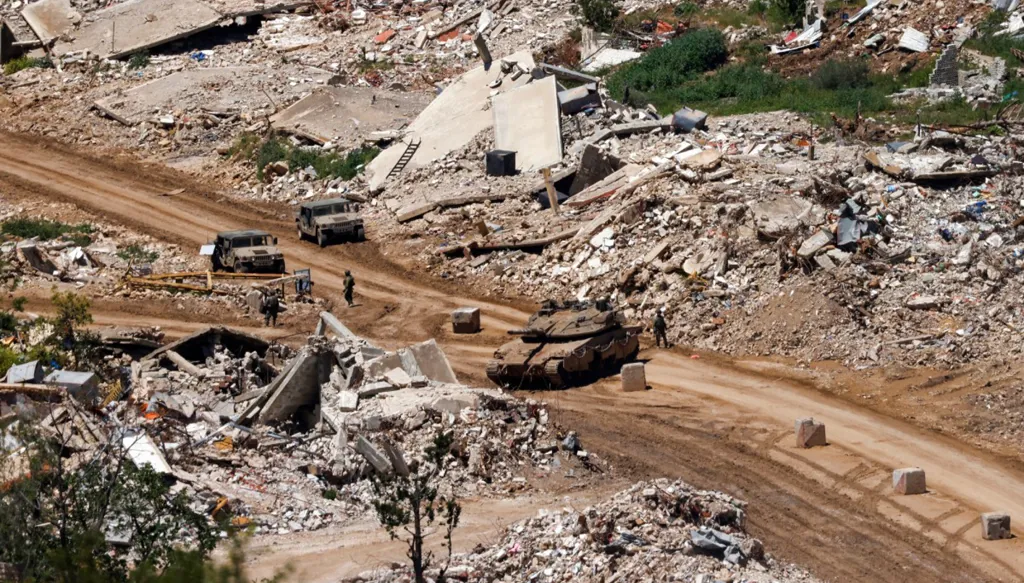
On the back of what was claimed to be the party’s victory, Israel occupied and destroyed more than it had in all its previous invasions of Lebanon combined.
The conditions that Tehran believed would serve it in destabilizing the Lebanese authority will, this time, prove sufficient to reveal the other side of the decline of its influence, as its regime struggles to survive on its own battlefield in Lebanon.
Disclaimer: The opinions expressed by the writers are their own and do not necessarily represent the views of Annahar.