

Iraq between Iran and the Gulf: Renewed tensions and an uncertain future
As Iran extends its influence through Iraqi actors and Gulf disputes resurface, Iraq’s regional role is again under scrutiny amid widening confrontation between Tehran and its adversaries



 Messenger
 Whatsapp
 Threads
 Email
Email
 Print
Print
 X
X
 Facebook
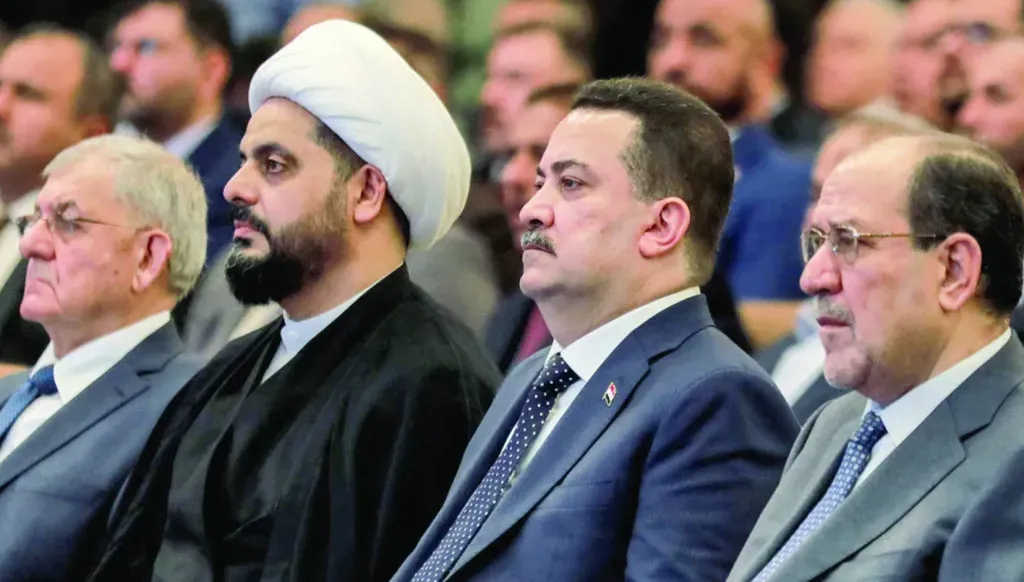


The recent Gulf war involving the Islamic Republic of Iran, the United States, and Israel has revealed several realities. Among the most notable is the renewed confirmation that Iraq, under Iran’s influence, has become a weak point in Arab security in general and Gulf security in particular.
It is also worth pausing at Jordan and its long standing, consistent position on the dangers and implications of Iran’s expansionist project. This was evident during King Abdullah II’s meeting with Kuwaiti Foreign Minister Sheikh Jarrah Jaber Al Ahmad.
The Jordanian monarch told the visiting minister, whose trip to Amman appears linked to the challenges Kuwait faces because of Iraq and Iranian influence there, that any agreement aimed at de-escalation with Iran must guarantee the security of Arab states. He stressed that Gulf security is essential to the stability and security of both the region and the wider world.
It is clear, and Jordan understands this better than most, that Kuwait’s issue with Iraq is not truly an Iraqi matter as much as it is an Iranian one. At a time when Kuwait served as Iran’s only diplomatic outlet among Gulf states, Iraqi Shiite militias remained quiet, even during the tenure of Prime Minister Nouri al Maliki.
The turning point in relations between Kuwait and Iran came in March 2022, when Kuwait announced an agreement with Saudi Arabia to share the Durra gas and oil field and rejected any Iranian claim to it. Kuwait later ruled out any Iranian role in determining the future of the field, which has since become strictly a Saudi and Kuwaiti matter, meaning it concerns only two member states of the Gulf Cooperation Council.
How did Iran respond to Kuwait?
Iran did not respond to Kuwait directly. Instead, it used Iraq as a channel. In this context, Iraq’s Federal Supreme Court challenged the maritime border demarcation agreement between Iraq and Kuwait. This was followed by rhetoric in Baghdad accusing Kuwait of encroaching on a maritime area near Mubarak Al Kabeer Port at the expense of Iraq’s Al Faw Port.
At all times, the government of Mohammed Shiaa Al Sudani appeared uneasy, yet it ultimately had to comply with Iranian directives and carry out what Tehran demanded. Notably, in recent days and weeks, Iraqi mobilization against Kuwait has intensified, particularly in southern Iraq, where the Kuwaiti consulate in Basra was attacked.
Iran’s Islamic Revolutionary Guard Corps and the commander of its Quds Force, Esmail Qaani, oversaw the mobilization of Iraqi groups aligned with Iran, such as Harakat al Nujaba and Kataib Hezbollah, and incited them against Kuwait. Other groups involved include Kataib Sayyid al Shuhada, led by Abu Alaa al Walai, as well as Kataib Awliya al Dam.
These Iraqi groups have long been ready to carry out any mission assigned by Tehran and have played a leading role in targeting Kuwait with drones and missiles. There is currently a wave of mobilization in Iraq directed against Kuwait, accompanied by a revival of rhetoric framing the relationship in terms of origin and offshoot, while completely ignoring what Kuwait has provided to Iraq, including the construction of Basra Stadium, a city hospital, and a residential complex for workers.
Iraq’s Future
Sooner or later, and in light of Iran’s emphasis on maintaining control over Iraq, the country’s future will come under scrutiny. Iraq once played a role in containing Iranian expansion in the region, a role ultimately undermined by the late Saddam Hussein. He withstood the Islamic Republic for eight years, but later wiped out those gains when he committed the grave mistake of invading Kuwait in the summer of 1990. The former Iraqi president ignored all basic logic and realities, including the fact that Iraq could not simply take control of Kuwait and its resources.
Amid the ongoing war between Iran on one side and the United States and Israel on the other, tensions between Iraq and Kuwait are resurfacing. Iran is using Iraqi actors to settle its scores with Kuwait.
Much will depend on how the current conflict unfolds, as it has shifted into a low intensity phase centered on Iran’s move to close the Strait of Hormuz and the United States imposing a blockade on Iranian ports. In effect, there is a US blockade countering Iran’s attempt to shut Hormuz.
Will Iraq return to playing a positive role in the region and its security, particularly in the Gulf? This remains a major question, and one of the key issues that will emerge in the aftermath of a war that increasingly appears to be edging toward a broader, quasi global conflict.
Disclaimer: The opinions expressed by the writers are their own and do not necessarily represent the views of Annahar.