Fragile truce shattered in southern Lebanon amid wave of airstrikes and ground explosions
Local authorities report sustained violations of the ceasefire, with intensified attacks across border towns and mounting civilian tolls despite diplomatic efforts to extend calm until mid-May.

Israeli attacks continue despite the announcement of a ceasefire on the 17th of this month for ten days, and then its extension by three weeks until May 18. What are the prominent violations in the south, and how many casualties have fallen as a result?
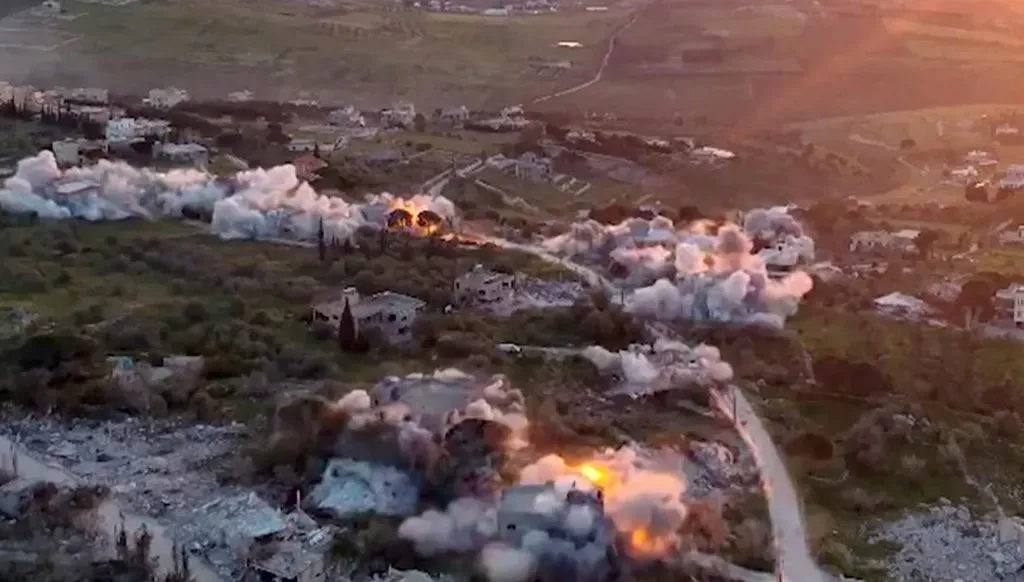
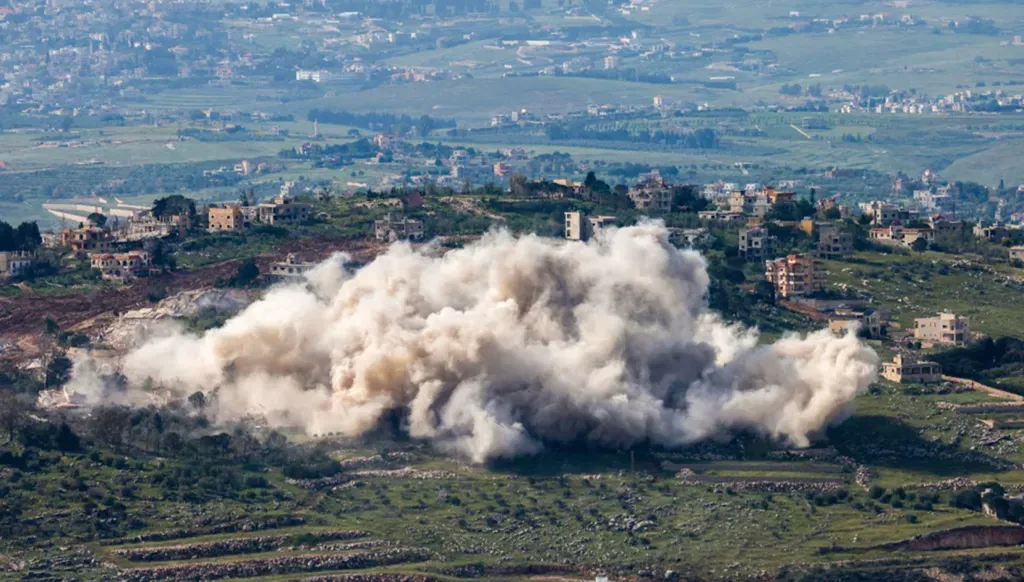
Less than three hours after the ceasefire between Israel and Lebanon came into effect, attacks resumed in Lebanon, with massive explosions in Bint Jbeil and its surroundings, as well as in Khiam, reaching Qantara and its vicinity.
Attacks on the south have been escalating since the early hours of Friday, April 17, just a few hours after the ceasefire began, peaking on Sunday with a wave of airstrikes, most of which were outside what Israel calls the “yellow line”.
These attacks resulted in the death of 14 people, including two children and two women, and injured 37 others, according to the Ministry of Public Health. The number of Israeli breaches of Lebanese sovereignty reached 500 aerial, naval, and land breaches.
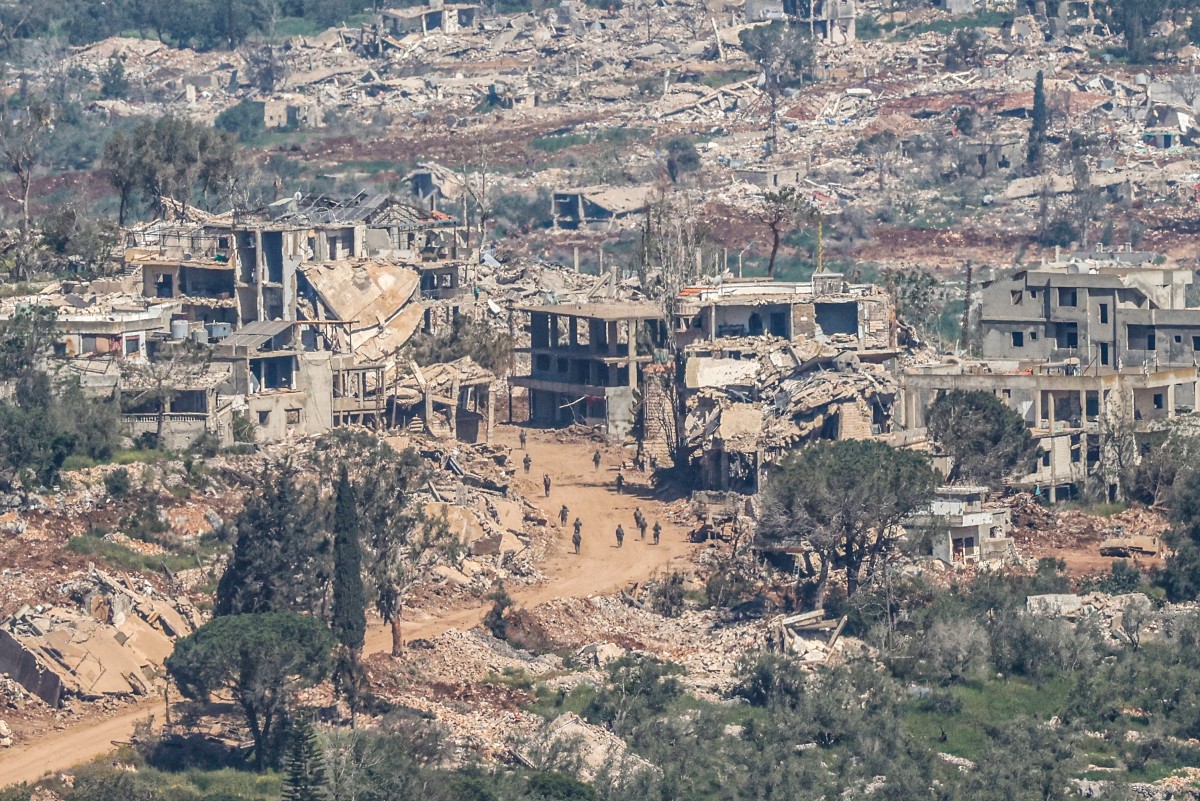
The attacks began on the first day of the ceasefire with the targeting of ambulatory crews in the town of Kounine, adjacent to Bint Jbeil, and then the targeting of a paramedic as he tried to leave Kounine towards Beit Yahoun, becoming the first victim after the ceasefire agreement came into effect.
Israeli soldiers in southern Lebanon. (AFP)
The Lebanese army was not spared, as it was directly targeted while carrying out a humanitarian mission with the Red Cross in Kounine, despite prior coordination with the “mechanism”.
The attacks escalated, reaching their peak with the targeting of civilians and journalists in the town of Tiri, then preventing the Red Cross and the army from rescuing journalist Amal Khalil, leaving her for hours in a house destroyed by Israeli shells, which led to her death despite all official Lebanese appeals to save her.
This came after two people from the city of Bint Jbeil were killed in Tiri, and journalist Zeinab Faraj was injured, whom the Red Cross took to Tebnin Hospital in critical condition.
Before the end of the first week of the ceasefire, the intensity of the attacks increased north of the Litani, with the death of three victims in a targeting on the Shoukin–Nabatiyeh road, and before that, four citizens were targeted in Yohmor al-Shaqif and Touline. In Yater, a drone attacked the town’s residents, preceded by the targeting of two individuals in Wadi al-Hujeir and a young man in Srifa.
On the ninth day of the truce, two people were killed in a raid on Safad al-Batikh (Bint Jbeil) and 17 others were injured, bringing the toll in one day to 7 martyrs and 24 injured.
The tenth and last day of the first truce was the bloodiest, with 14 martyrs, including two children and two women, while 37 others were injured. The last attack was recorded on Monday in Al-Qulaylah, resulting in the martyrdom of one citizen, bringing the number of victims after the ceasefire to 35 and 75 injured, including children, women, and paramedics.
The pace of house and residential unit explosions did not decrease after the ceasefire, continuing to escalate, with more than 4 to 5 explosions recorded per day. Bint Jbeil had the largest share with around 20 explosions over ten days, followed by Khiam with 10 explosions, while the towns of Naqoura, Ayta al-Shaab, Beit Lef, Hanin, Yaron, Marun al-Ras, and Aitaroun in the Bint Jbeil district witnessed daily explosions. In the Marjayoun district, more than one explosion was recorded in Mays al-Jabal, Markaba, Taybeh, Qantara, and Deir Siryan.
The airstrikes increased in intensity, reaching their peak on Sunday compared to the first week of the ceasefire.
The airstrikes targeted the towns of Kfar Tebnit, Zawtar al-Gharbiyah and Zawtar al-Sharqiyah, Mayfadoun, Beit Yahoun, Kounine, Hadatha, Burj Qalawiyeh, Arnoun, reaching north of the Litani, specifically the Ali al-Taher hills.