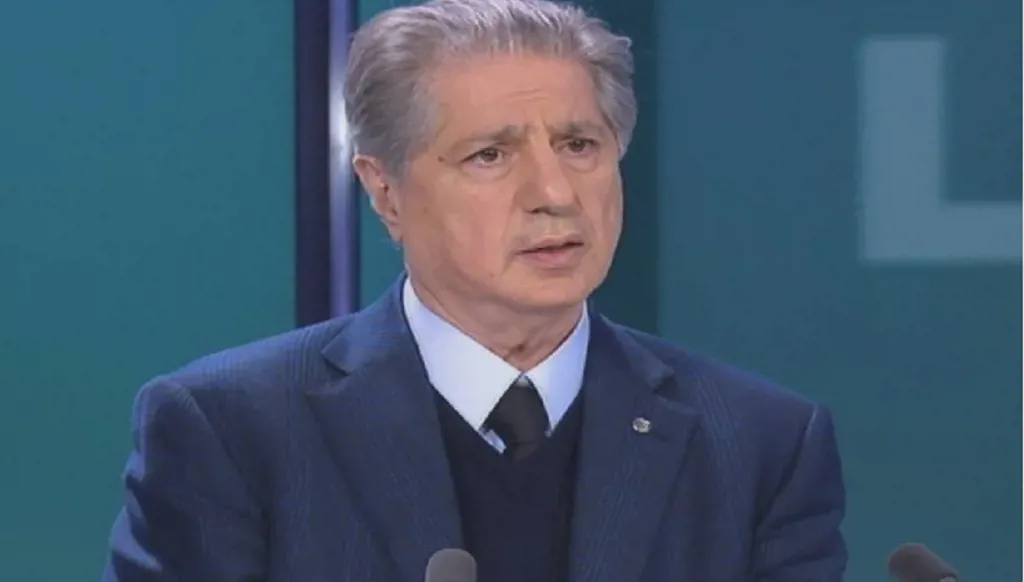
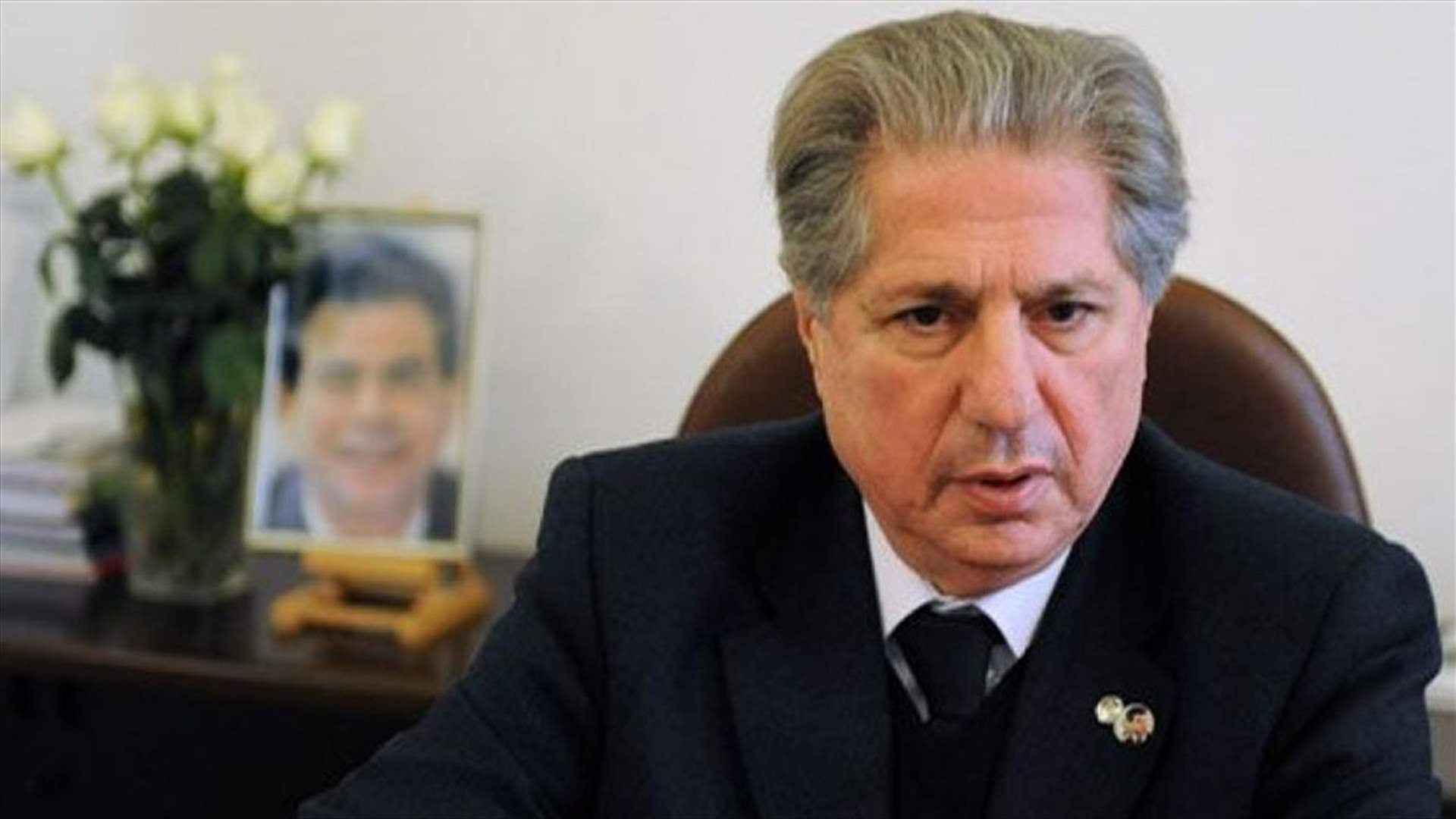
In all honesty, in 1983, with the start of direct negotiations with Israel, supported and participated in by America, my term was facing difficulties, and at times even direct threats. Let us remember that it was during the era of Hafez al-Assad, the absolute ruler of Syria and an ally of a powerful regional “rejection front.” There is no need to reiterate the Syrian president’s political logic, his methods of ruling Syria, or his approach to Lebanese affairs.
Thus, the situation inside Lebanon was complex, as the opposition was strong at that time and was subject to threats and insults. How could I, as a Lebanese president then, resort to direct negotiations with Israel without Syria’s approval? This left a more than complicated reality, and, in clearer terms, I faced many things during that era, including insults and threats and so on. I confirm what is certain: we did not concede an inch of Lebanese land, and we were decisive on this matter, as in national and sovereign matters.
Now the circumstances are completely different. The era of Hafez and Bashar al-Assad is over, Iran is exhausted and under fierce pressure from the United States and Israel, and “Hezbollah” is engaged in a fierce war. Its situation today is entirely different from when it had excess strength; it has been worn down militarily and politically after the last war alongside Iran. Therefore, there is a clear difference between my era and what is happening today. I see Lebanon as standing before a golden opportunity to restore its independence and proceed with the peace option.
President General Joseph Aoun did well by engaging in direct negotiations in harmony with Prime Minister Judge Nawaf Salam, as the circumstances and frameworks are different from my era. The United States and the entire West, as well as the Arab countries and the Gulf, along with a large segment of the Lebanese people, are with him, which means that there are many facilitations. Lebanon should take advantage of this golden opportunity to achieve the desired peace.
Does that mean that President Gemayel supports the step of direct negotiations? And if President Aoun meets President Trump, will he also meet Israeli Prime Minister Benjamin Netanyahu, especially after Trump contacted him and the planned contact with Netanyahu did not take place as expected?
I do not know the details and program of President Aoun in Washington. His Excellency knows exactly the rules of the game, and we have great confidence in him. I encourage him to proceed with direct negotiations, which are demanded by the Lebanese. As I mentioned, it is an opportunity that might not be repeated, as all the “cartels” that existed during my era are no longer there—from the radical left, fundamentalists, Assad’s Syria, Palestinian rejection fronts, to the opposition in Lebanon and many others.
So there is an opportunity today that must be invested to support the course of the era, escape the wars that afflicted the Lebanese, and at the same time strengthen national unity, support the path of stability, the Lebanese Army, economic and financial support, investments, and so on. Therefore, I support President Aoun in pursuing direct negotiations to the end.
In your opinion, will we reach the signing of a peace treaty?
I hope this initiative succeeds, and President Aoun is aware of the national interest, and he appreciates the rules of negotiation from all sides. Things are facilitated at all levels, whether internally, Arab, or internationally.
It is reported that Speaker Nabih Berri rejects direct negotiations, and he was visited yesterday by former Socialist Party leader Walid Jumblatt, who also rejected direct negotiations, and seems to be in harmony with Berri, and called for a return to the armistice agreement and dialogue with 'Hezbollah', what about this issue?
National awareness is needed, and President Aoun understands that. As for Speaker of the House Nabih Berri, he is in a long-standing alliance with “Hezbollah,” and let us not forget the popular base of both “Hezbollah” and the Amal Movement. So Speaker Berri cannot break away from this alliance and he takes care of his audience, and there are many circumstances surrounding him that oblige him to continue with it.
However, his recent positions were positive; he is a safety guarantor and a Lebanese national figure, without ignoring two key points, namely his courage in the Council of Ministers when the Amal Movement ministers agreed to dissolve the military wing of “Hezbollah,” and his role in the sessions of Parliament. In other words, Speaker Berri’s positions must be taken at face value, and they are not easy. Speaker Nabih Berri knows where Lebanon’s interest lies.
And regarding Jumblatt, his position supports that of Speaker Berri, but he is keen on the success of President General Joseph Aoun's era, and his position was supportive of the President's mandate.
Does President Amine Gemayel fear internal discord?
I do not think that “Hezbollah” is capable of creating discord like on May 7 and the “black shirts” events, considering that its situation is very sensitive and it cannot deviate from the position of the other sects and political components. Meaning it “does not want to break the pot,” but it may carry out no more than political maneuvers.
In addition, it does not have the freedom to act abroad after the significant transformations following the fall of the Syrian regime, the war on Iran and its support for it, and what this led to in terms of assassinations of first and second-rank members of the party, and all that has befallen its base in terms of destruction, devastation, deaths, and injuries. Therefore, I exclude that it would resort to discord or mobilize the street.
“Hezbollah” and everyone should calm down and work in the country’s interest and strengthen national unity, as we are at a very exceptional juncture. We must beware of any project leading to discord, and it is in Hezbollah's interest to achieve stability in the country, as its base needs peace.
How do you describe the recent Saudi move in light of the visits of the envoys on behalf of the Presidents of the Republic and Parliament and other forces?
The Kingdom of Saudi Arabia is the elder brother of Lebanon and has always supported its security and stability. I previously had an experience that I am proud of with Saudi Arabia during my term in 1982, when I met King Fahd bin Abdulaziz more than once. I found the Kingdom’s keenness on Lebanon and its standing by it in all crises and hardships, as well as its political, economic, and financial support. Riyadh was a key support at every turn, and this is what I sensed from King Fahd and Saudi officials, as they did not leave Lebanon but stood by it like a big brother in both good times and bad.
Today, Saudi Crown Prince Mohammed bin Salman, with all his skill, wisdom, and clear vision, is continuing the Kingdom’s historical journey toward Lebanon. He stands with it and has not deviated from these fundamentals, but rather supports our country in all forums and at all times. From here come the consultations with the Kingdom for the benefit and good of Lebanon, as Saudi Arabia has never left Lebanon in any era, and this also extends to other GCC countries as well.
Frankly, is Sheikh Amine Gemayel comfortable with the internal Christian situation at this stage?
I am in favor of the overall Lebanese situation being stable and comfortable, and for there to be reconciliation and communication between its leaders, because we have no choice but national unity.
On the Christian-to-Christian level, we have made significant progress and overcome differences despite discrepancies and sometimes debates, but I consider that matters have improved a lot today and everyone has come to accept one another. This is what we should continue with: reason should prevail, and a Christian role is needed to enhance Lebanon’s presence internally and externally, especially since we are facing a very exceptional situation on all levels.
Is President Gemayel comfortable with the performance of the current government?
Prime Minister Nawaf Salam is performing his role excellently and bears responsibility as a statesman, and this is evident from his positions. The same applies to the President of the Republic and the ministers. This is what we hope for: to play an advanced role in helping Lebanon overcome its setbacks and crises.
Is President Gemayel afraid or optimistic for Lebanon?
The dangers are still significant, and we should not be complacent. We have many difficult entitlements and a difficult “birth process,” starting from the issue of refugees and its danger, to the recent war and its political and economic cost, as well as disputes, discrepancies, and others. But I am confident in the unity of the Lebanese, because the Lebanese are kind and quickly recover from their crises. At the core, I see the necessity of fortifying the internal front, and I call for a comprehensive national meeting at the Baabda Palace under the President of the Republic, General Joseph Aoun, to critically review everything that has happened and is happening, and to come out with a consensus from all those who participate in this conference—meaning reaching a national conclusion.
Eventually, would the conference be held after direct negotiations or before them?
The conference is good at any time. There is no problem if it is held while negotiations are ongoing, as this helps reach positive results in the peace process. However, the national conference is necessary to produce a national agreement that reflects the consensus of all participants.





 Messenger
 Whatsapp
 Threads
 Email
Email
 Print
Print
 X
X
 Facebook