Amid the world’s focus on the escalation with Iran, the United States has been quietly moving to reshape its influence over vital maritime routes in an effort to encircle China and reduce its influence ahead of the proposed summit between Chinese President Xi Jinping and American President Donald Trump in May.
Instead of merely reacting to crises, the Trump-led American administration has adopted a proactive approach aimed at securing control over the main choke points through which global trade and energy supplies pass.
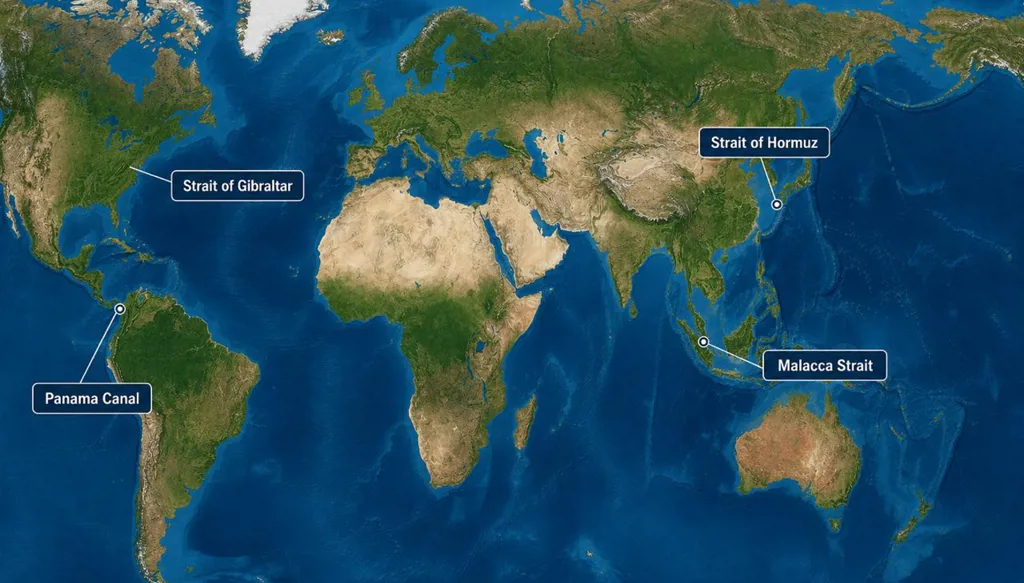
In a relatively short period, the United States managed to solidify its presence at four critical maritime points, using diverse tools ranging from diplomacy to pressure and force. The result is a new global maritime order that clearly tilts toward American dominance.
This strategy began with the Panama Canal, one of the most important links between the Atlantic and Pacific Oceans. Through a mix of political pressure and diplomatic understandings, Washington succeeded in reducing Chinese influence, benefiting from internal judicial decisions in Panama that ended the privileges of a Chinese company managing key ports.
This shift allowed the U.S. to enhance its presence without direct military intervention while ensuring greater naval movement facilities.
Conversely, Washington adopted a stricter approach in the Strait of Hormuz, where it resorted to selective maritime blockades targeting Iranian ships, limiting Tehran’s ability to export oil. This move reconfigured the balance of power in the region and prompted Iran to show relative flexibility in negotiations.
In the Strait of Malacca, the Trump administration shifted its focus to Southeast Asia, relying on a partnership with Indonesia. A defense agreement between the two parties on April 13 granted Washington the right to fly over Indonesian airspace, providing a permanent capability to monitor one of the world’s most important trade routes, especially for China. It is one of the primary routes through which about 80% of China’s oil imports and about 40% of global trade pass.
In the Strait of Gibraltar, Washington enhanced its cooperation with Morocco through a long-term agreement signed on April 16, covering military and intelligence fields, benefiting from its strategic geographic location at the Mediterranean’s entrance.





 Messenger
 Whatsapp
 Threads
 Email
Email
 Print
Print
 X
X
 Facebook