Lebanon–Israel talks in Washington: Shared diagnosis of Hezbollah, divided paths to peace

Opinion 27-04-2026 | 08:11

Lebanon–Israel talks in Washington: Shared diagnosis of Hezbollah, divided paths to peace

While Beirut, Tel Aviv, and Washington appear aligned on identifying Hezbollah as the central issue, deep divisions over implementation and sequencing continue to stall any breakthrough agreement.

Lebanon–Israel talks in Washington: Shared diagnosis of Hezbollah, divided paths to peace
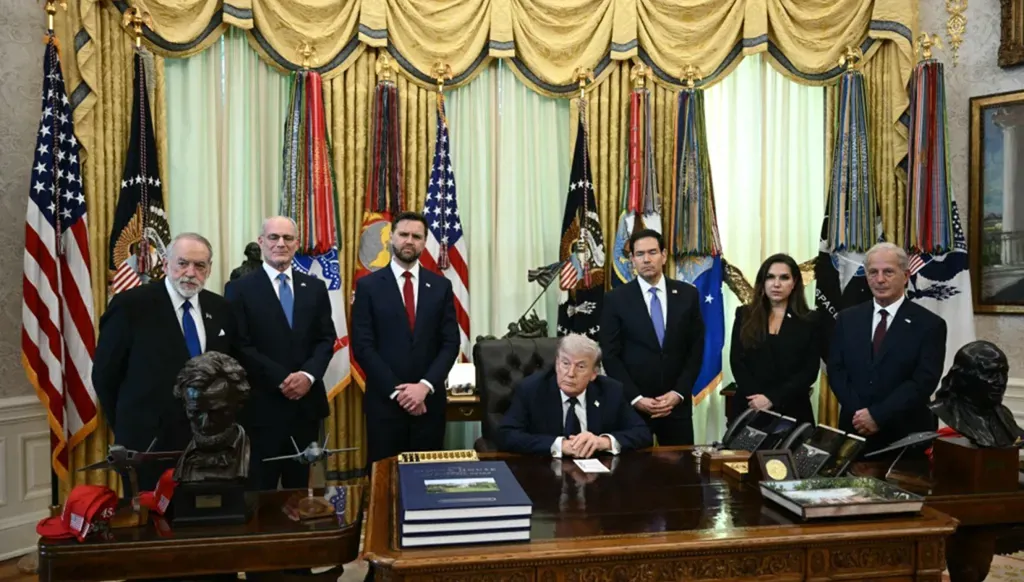
What is the obstacle that is preventing a quick agreement between Lebanon and Israel, as desired by the United States? (AFP)
Smaller Bigger


In the preliminary direct negotiations between Lebanon and Israel, which gained momentum last Thursday in Washington, with the second session held at the White House under the sponsorship and attendance of U.S. President Donald Trump, efforts are focused on acknowledging a common problem among the negotiators and the sponsor, represented by "Hezbollah"!


Before, during, and after the negotiating session, there was persistent American-Israeli insistence, without Lebanese objection, that "Hezbollah" is a Lebanese problem and an Israeli-Lebanese problem, and therefore ways must be sought to end this problem, considering that the disputes between Lebanon and Israel are all solvable, and are described as "very simple"!


Trump, in the press conference he held after the end of the second preliminary session, pledged to help Lebanon protect itself from "Hezbollah." The U.S. ambassador to Israel, Mike Huckabee, who was invited to the second session, went as far as describing "Hezbollah" as a mischievous child throwing stones at everyone's windows, thus preventing possible coexistence between neighbors. He expressed his belief that the efforts led by his country would lead to "kicking this child out of the neighborhood."


The Israeli statement, preceded by Foreign Minister Gideon Sa’ar a day before the second session, who said that Lebanon and Israel share one problem called "Hezbollah," was reiterated in detail by the Israeli ambassador in Washington during the White House press conference. He said, "We are united with the Lebanese government in the desire to rid the country of this malicious influence called Hezbollah," and continued: "If we continue to focus only on the issue of Israeli withdrawal, it will lead to failure, but if we focus on the root of the problem, that is, Hezbollah and its hostile intentions, we will be able to remove the threat and achieve peace. Any leniency towards Hezbollah or elements of the Iranian Revolutionary Guard will make achieving the common goal unattainable."


The American and Israeli discourse does not emerge from a "Lebanese vacuum," as President Joseph Aoun, in his speech that paved the way for the launch of direct negotiation initiatives, gave an honorary description to "Hezbollah" and considered that it works to topple the Lebanese state, setting a trap for it in favor of Iran. Prime Minister Nawaf Salam does not stop affirming his steadfastness that disarming "Hezbollah" is a Lebanese national need, regardless of Israeli demands!


All this indicates an unprecedented Lebanese-Israeli-American agreement on diagnosing "Hezbollah," and hence the preparation for direct negotiations stems from this shared diagnosis.


In this case, where does the problem lie that prevents reaching a swift agreement between Lebanon and Israel, according to the American desire expressed in the White House press conference?


It is clear that the main disagreement revolves around the executive mechanisms, as Israel finds that Lebanon — even if it has the intention — does not have the capabilities to disarm "Hezbollah," and therefore it must agree to let Israel assist it in achieving the "common goal."


This requires Lebanon, instead of focusing on the Israeli withdrawal from the territories it occupies in Lebanon as a precondition for starting work on an agreement between the two countries, to strive to uproot the roots of the problem, that is, "Hezbollah's arms," on the grounds that Israel's retreat, if acceded to, will strengthen "Hezbollah" and its arms, something Israel will not accept at all!


Conversely, Lebanon acknowledges, in one way or another, its incapacity in its current state to disarm "Hezbollah," but it does not want any direct role for Israel in that process.


Therefore, it requests the international community to provide Lebanon with all the weapons and means needed by the Lebanese armed forces to be able to limit arms across Lebanon, at a time when Israel is required to, instead of involving Lebanon, contribute to resolving the issue by allowing the state to become capable and strong.


This includes its complete withdrawal from Lebanon, the cessation of hostile operations, the release of Lebanese prisoners from its jails, allowing for reconstruction, and ending the policy of emptying border villages and towns!


The agreement on diagnosing "Hezbollah" is dissipated by the deep disagreement over the means of resolving it!


Lebanon's problem in this disparity lies in the American sponsor, as although it agrees with Beirut on the need to lower the current tension level through sponsoring a ceasefire, it grants Tel Aviv temporary legitimacy to establish a security buffer zone inside southern Lebanon, which is to be discussed for removal only after the "Hezbollah" issue is resolved!


Based on that, can this fundamental disagreement between Lebanon and Israel be resolved through negotiation, or does the despair of reaching an agreement lead war to have its say?


Disclaimer: The opinions expressed by the writers are their own and do not necessarily represent the views of Annahar.