White House talks on Lebanon–Israel: Trump’s role, fragile ceasefire, and uncertain diplomatic path
Amid high-level U.S. engagement and regional divisions, negotiations inch forward through cautious, incremental steps with no clear breakthrough yet in sight.
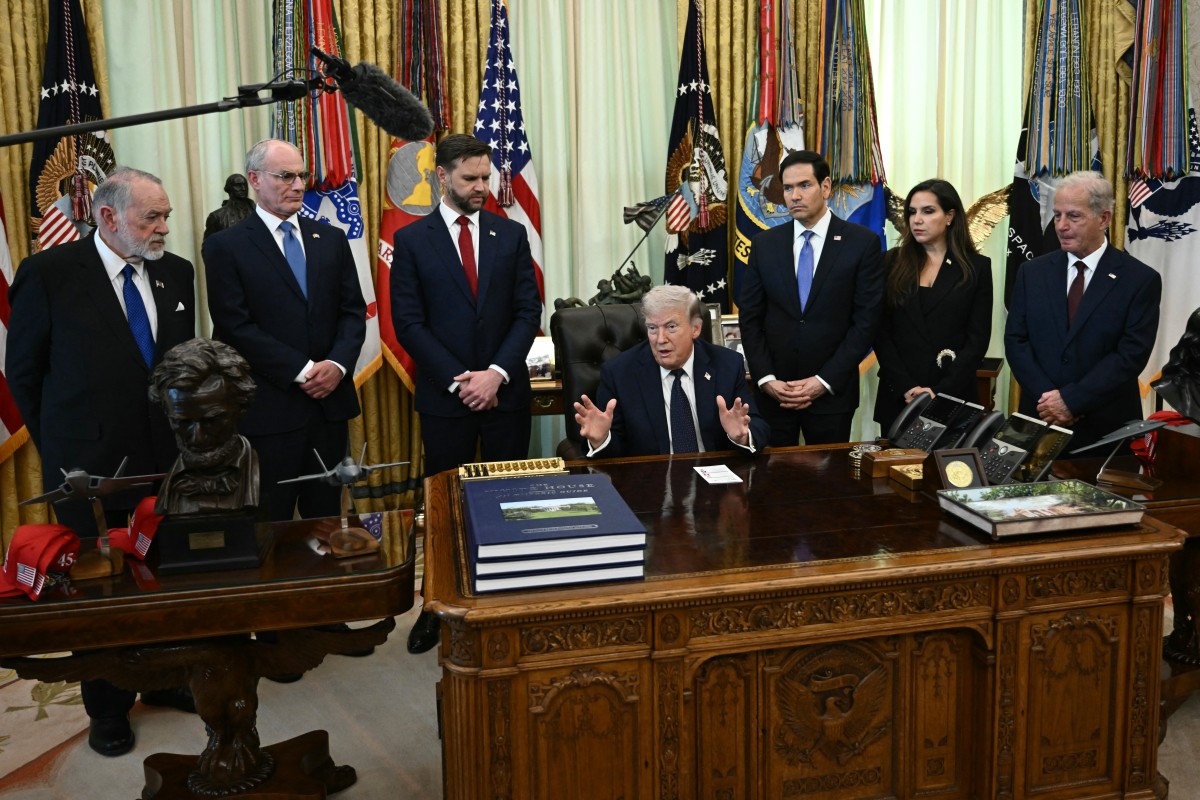
Estimates varied in Washington regarding President Donald Trump’s participation in Lebanese-Israeli talks held at the White House last Thursday. Some saw this as an indication of direct presidential involvement in managing a highly complex issue, while others considered it a hasty move that may lack a solid foundation to ensure its sustainability.
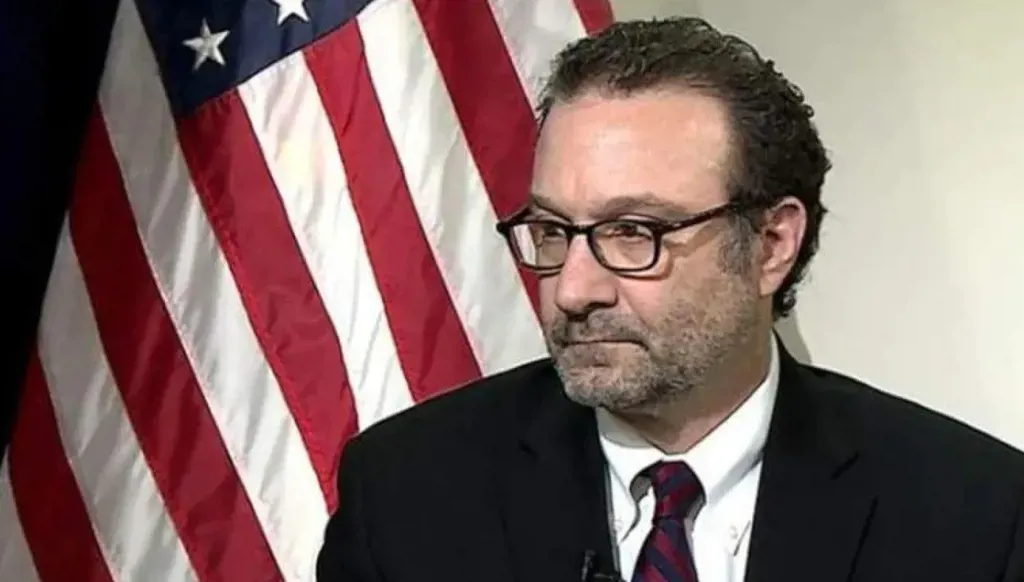
Conversely, some observers believed that this participation reflects a high level of American interest, suggesting that the President is convinced of the possibility of progress toward establishing a ceasefire, reducing tensions, or even paving the way for a broader truce. In this context, former U.S. envoy to Beirut, David Schenker, indicated that Trump’s initiative reflects his belief in a gradual opportunity that can be built upon.
However, voices have emerged warning that any potential agreement may remain fragile, given the ongoing military operations and the absence of key parties, most notably Hezbollah, from the negotiating table. It is considered ambitious to expand regional agreements like the “Abraham Accords,” which remains out of reach at this stage, while the minimum goal is to reduce the influence of the Iranian Revolutionary Guard in Lebanon.
On the political meeting level, the possibility of a meeting between Lebanese President Joseph Aoun and Israeli Prime Minister Benjamin Netanyahu remains unresolved amid a clear divergence in positions and significant sensitivity in the Arab world toward any direct openness to Netanyahu.
In this context, the Lebanese government seeks to buy time and broaden support by engaging in consultations with Saudi Arabia, France, and Egypt, which could delay any sensitive steps. Aoun prefers not to travel to Washington without guaranteed tangible results to avoid political embarrassment.
Peace or escalation
Former U.S. envoy to Beirut, David Schenker, notes that “the high-level interest reflects the President’s conviction of potential progress, whether toward peace, reducing escalation, or even reaching a truce or border demarcation,” pointing out that “the range of potential achievements remains wide.”
The Lebanese-Israeli meeting at the White House. (AFP)
He adds that Trump sees this path as an opportunity, especially in his quest to expand the scope of the Abraham Accords, although acknowledging that this may be unrealistic in the current phase, “but he at least realizes the possibility of reducing the influence of the Iranian Revolutionary Guard in Lebanon through Hezbollah.”
Regarding the U.S. President’s role, Schenker clarifies that he will not be involved in technical details, “but his presence carries significant symbolic importance,” suggesting this role will be tested in whether it leads to a meeting between Aoun, Trump, and Netanyahu, while noting that “positions remain very divergent.”
He explains that Lebanon seeks to end the Israeli occupation and return about one million displaced people from the south, “which is a logical demand,” while Israel focuses on ending the presence of the Iranian Revolutionary Guard on its borders and presses the Lebanese state to take practical steps, whether militarily or politically, to achieve that. However, to date, “no actual movement has been recorded by either party, and what has been achieved is limited to extending the ceasefire.”
He concludes by stating that what has occurred so far “remains within the framework of small steps” on a path whose results are still unresolved.
Amid American pressures and Lebanese desires to secure broader international support, the negotiation process remains open to multiple possibilities within the framework of gradual and calculated steps.





 Messenger
 Whatsapp
 Threads
 Email
Email
 Print
Print
 X
X
 Facebook


 The Lebanese-Israeli meeting at the White House. (AFP)