

Support for Lebanon’s army tied to disarmament efforts
France pushes ahead with an aid conference as US pressure grows to confine weapons under state control and task the Lebanese army with disarming Hezbollah.



 Messenger
 Whatsapp
 Threads
 Email
Email
 Print
Print
 X
X
 Facebook


A.S.
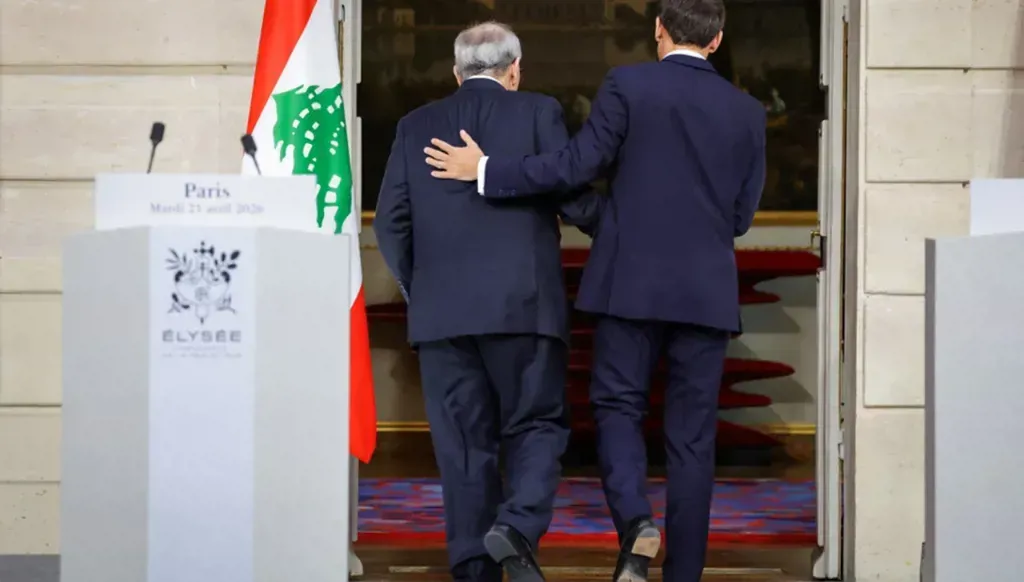
No new date has yet been set for the conference to support the Lebanese army and security forces, which France had announced last February and scheduled for March 5, before Lebanese President Joseph Aoun and French President Emmanuel Macron jointly announced its postponement on the first of that month.
Hours after the outbreak of the US and Israeli war on Iran at the end of last February, the Lebanese and French presidencies said in a joint statement that the two presidents had decided together to postpone the international conference to support the Lebanese Armed Forces and Internal Security Forces, which had been set for March 5 in Paris, to April, as the appropriate conditions to keep the original date were not in place.
During his participation in the opening of the European summit in Cyprus, Aoun met with Macron, who stressed that Lebanon must receive tangible support and that Europe should become more engaged in this issue. He said that a conference would be organized to support Lebanon and that efforts toward negotiations, peace, and stability would continue.
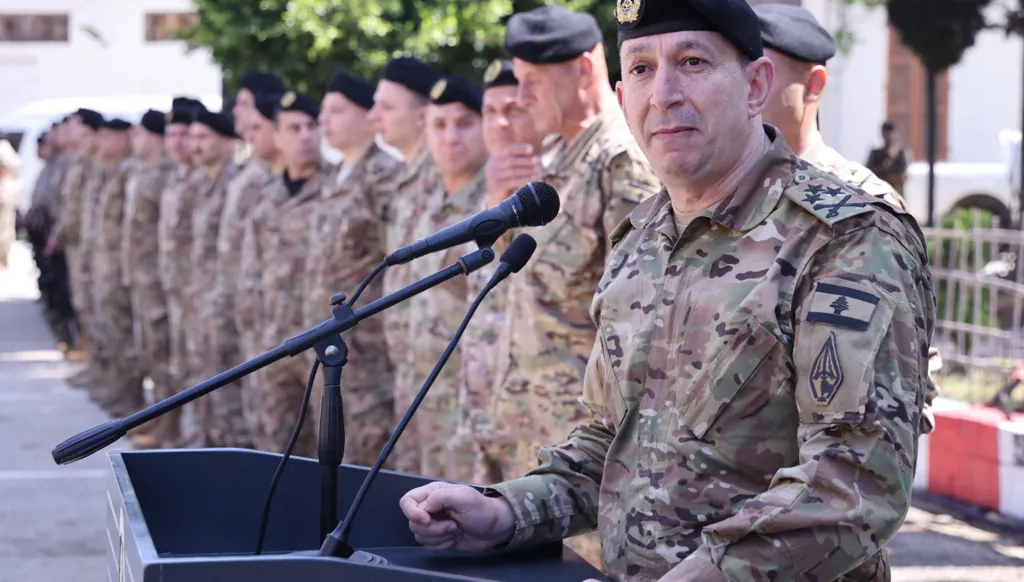
The French position in support of Lebanon has not changed, but organizing the conference, which had been prepared through a preliminary meeting in Cairo last February, is expected to draw international attention following the expansion of Israeli attacks on Lebanon at the start of last month and Lebanon’s engagement in direct meetings with Israel in Washington, paving the way for direct negotiations.
France’s insistence on holding two conferences, one to support the army and another for reconstruction in Lebanon, reflects its consistent commitment to helping the country, despite Washington sidelining Paris from the anticipated direct negotiations between Lebanon and Israel.
However, the priorities of the international community, including France and the United States, have shifted toward focusing on the role of the Lebanese army in consolidating control over weapons, especially after the Lebanese government’s decision on March 2 to ban the military and security activities of Hezbollah and classify them as illegal, an unprecedented move not seen even during the 1980s under President Amine Gemayel, despite the signing of the May 17 Agreement.
France has made no secret of its call for weapons to be placed under state control and for the Lebanese army to take on this complex domestic task, at a time when Hezbollah opposes any such step as long as Israeli attacks on Lebanon continue. The group maintains that the issue of its weapons should be addressed through a national dialogue leading to the adoption of a defense strategy, as outlined in the inaugural address of President Joseph Aoun on January 9, 2025.
Support tied to restricting weapons
The US administration has not concealed its dissatisfaction with what the Lebanese army has achieved in terms of restricting weapons before the expansion of Israeli attacks. Criticism of the military institution escalated to the point that a planned visit by Army Commander General Rodolphe Haykal to Washington last November was canceled. In this context, the Israeli delegation in the “mechanism” committee repeatedly claimed that the army was not carrying out its duties, was not confiscating all weapons south of the Litani River, and was not entering all storage sites.
Amid these criticisms, France announced it would organize a conference to support the army and armed forces, based on providing logistical assistance and the necessary equipment to complete the task of restricting weapons, rather than supplying arms that would enable it to respond to Israeli attacks and violations of Lebanese sovereignty. This was stated explicitly by former US envoy to Lebanon Ambassador Tom Barrack in an interview with Télé Liban on July 21, 2025, where he affirmed that his country “provides support to the Lebanese armed forces (…) and they must be properly trained as peacekeeping forces, not as offensive military forces, and within that framework everyone can begin to feel reassured (…)”.
Accordingly, the primary support for the army in the coming phase will be aimed at restricting weapons and avoiding what Washington and Tel Aviv consider a failure in this mission, alongside repeated calls for the army to carry out its duties in disarming Hezbollah, with expressed readiness to assist in implementing this task.