

Hezbollah questions US signals on disarmament amid push for Lebanon–Israel deal
Barrack’s remarks stir suspicion within the party, which sees possible tactical reassurance masking a broader American drive toward a peace agreement that could sideline its weapons.



 Messenger
 Whatsapp
 Threads
 Email
Email
 Print
Print
 X
X
 Facebook
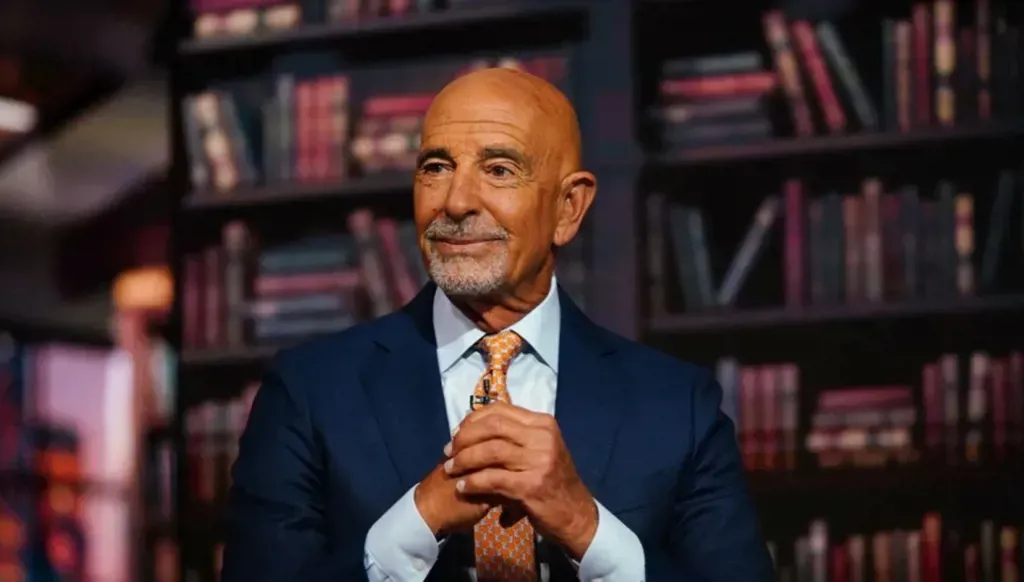


Once again, Washington’s former envoy to Beirut and its ambassador to Ankara, Tom Barrack, has widened the circle of speculation and interpretation after recently making a controversial statement suggesting that there are obstacles preventing Hezbollah from being compelled, for now, to hand over its weapons in implementation of government decisions.
Observers do not see this as a slip of the tongue by the American diplomat, especially since during his repeated visits to Beirut following the November 27 agreement of the year before last, he reiterated the same position three times in more than one capital and on various occasions, including during his visit to the Lebanese capital as an envoy from his administration. Each time, his stance came across as a decisive word during periods of intense internal and external political tension over the future of the party’s weapons, particularly as the issue has become urgent, highly sensitive, and complex, with significant implications both domestically and regionally.
Accordingly, it becomes legitimate to ask what prompted Barrack to make his statement at this specific time, especially as tensions and acts of violence continue in the border area and as rounds of direct negotiations between Lebanon and Israel, under direct American sponsorship, get underway. His remarks came precisely on the eve of the second round, which Washington insisted be held at the White House and in the presence of Donald Trump, in an effort to elevate its importance and amplify the stakes attached to it.
There is no doubt that a statement of this kind, coming from a senior American diplomat, is expected to bring reassurance to Hezbollah and reinforce its longstanding and well-known rhetoric regarding its weapons, based on the argument that no internal balance of power can force it into such a step. Nevertheless, according to sources close to the party, it is carefully examining Barrack’s remarks, searching between the lines for their implications and underlying motives.
Hezbollah is well aware that the American side is fundamentally opposed to its weapons and to its so called resistance role, and it understands that Washington advocates stripping it of those weapons and ending any such role sooner rather than later. It was therefore only natural for the party to view with suspicion an American statement suggesting that disarming it is not an easy matter and that pressing the issue could inject a factor of instability into Lebanon’s domestic scene, especially at this particular stage.
While such a position may be pleasing to the party and reinforces its confidence in itself and in its well known stance rejecting the surrender or voluntary handover of its weapons to the state, especially given that the Egyptians had previously tried to promote a proposal broadly centered on guaranteeing a freeze on the weapons and restraining any use of them, the party is nevertheless subjecting this renewed American message to scrutiny from two angles.
First, that a pragmatic American actor can easily walk back a position expressed at a given time and stage, and enjoys the freedom of maneuver to move toward deeper understandings whenever an opportunity arises.
Second, in this sense, the party does not rule out that Barrack’s statement could be a temporary reassurance aimed at those who need reassurance, with the goal of facilitating a peace treaty and settlement agreement between Lebanon and Israel, which is the declared objective Washington is pursuing. This comes particularly after it succeeded in preparing the stage and setting the table for direct negotiations between Lebanon and Israel, which US President Donald Trump is betting will culminate in a meeting bringing together Lebanese President Joseph Aoun and Israeli Prime Minister Benjamin Netanyahu. After that, the issue of weapons would become solely an internal Lebanese matter, eventually stripped of effectiveness and role, especially since the Lebanese government has already banned any military activity by the party and would then be able to treat it as acting outside the bounds of public order.
Accordingly, as the party seriously examines the background of the American position at this moment, it is closely monitoring official domestic movement based on the view that the timing is favorable to remove Lebanon from the circle of conflict with Israel, and it will do everything in its power to ensure that this opportunity is not missed.
In sum, the party does not appear to be in a complacent or reassured position regarding the American statements about its weapons. Instead, it is shaping its direction and actions on a different basis, while at the same time resuming its pushback against direct negotiations on one hand, and throwing down a challenge to the authorities, which it considers incapable of defending the country against Israeli violations, on the other.
In short, the American side may have more than one motive for making such remarks through Barrack, and at the same time the party has more than one reason to be wary of the underlying intentions behind them, according to the same source.