

UAE tops global rankings for economic stability in 2025
Data released in 2025 confirm that the UAE’s top ranking as the world’s most stable economy reflects strong growth and a diversified economic base.




 Messenger
 Whatsapp
 Threads
 Email
Email
 Print
Print
 X
X
 Facebook
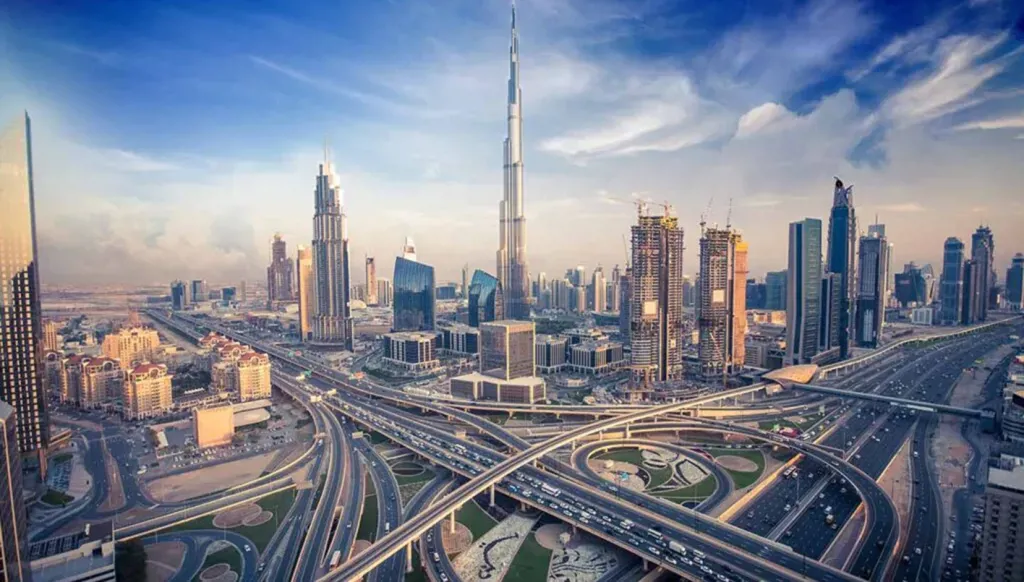


The United Arab Emirates ranked first globally as the most economically stable economy for 2025, according to the US News & World Report rankings. It surpassed advanced and long-established economies, providing international recognition of the resilience of the UAE’s economic model and its ability to balance growth with sustainability. Official data showed that the country’s GDP reached approximately $124.9 billion in the first quarter of 2025, marking a 3.9% increase compared to the same period last year. Non-oil sectors continued to contribute over 75% of total output, reflecting the success of the nation’s economic diversification strategy.
In the first half of 2025, real GDP rose to around $252.96 billion, growing by 4.2%, while the non-oil sector recorded even stronger growth at 5.7%. This clearly indicates that the economy is driven by trade, financial services, tourism, and technology. Non-oil trade also saw remarkable growth of about 24.5% during the same period, reinforcing the UAE’s position as a global trade hub connecting Asia, Europe, and Africa. Dubai’s economy grew by 4.7% during the first nine months of 2025, reaching a total output of approximately $96.66 billion. Several sectors saw significant progress, including the health and social services sector, which expanded by more than 15%. Dubai International Airport also welcomed over 95 million passengers in 2025, a record number reflecting the strength of the aviation and tourism sectors and their role in supporting non-oil growth.
On the investment front, foreign direct investment in the UAE reached around $45.7 billion in 2024, an increase of nearly 50% compared to the previous year, placing the country among the top ten global destinations for FDI. This investment momentum continued into 2025, supported by currency stability, flexible regulations, advanced infrastructure, and high credit ratings that give the economy a competitive edge in attracting global capital.
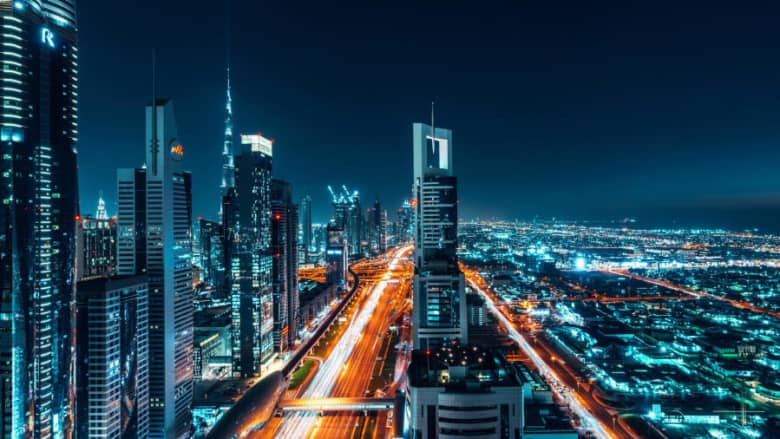
Fiscal discipline has played a key role in reinforcing this stability. The UAE maintains a low level of public debt compared to many advanced economies, while sustaining high credit ratings from major global rating agencies. This gives the country greater access to low-cost financing and strengthens international market confidence.
Economists emphasize that this achievement did not happen by chance. Economic expert Dr. Khaldoon Abdul Samad told Annahar that the UAE’s top ranking among the world’s most stable economies “reflects its success in building a diversified economic model capable of absorbing shocks, based on advanced investment laws, a competitive business environment, and significant investment in the knowledge economy and digital infrastructure.” He added that the country now serves as a regional hub for managing investments and markets across the Middle East, Africa, and South Asia.
According to Abdul Samad, the significance of this ranking goes beyond symbolism. “It reinforces the UAE’s position as a global financial and commercial center, enhances its ability to attract multinational companies and entrepreneurs, and supports its ambitious plans to transition toward an economy increasingly driven by innovation, advanced technology, and clean energy.”
The UAE is not only achieving numerical growth but is also establishing sustainable growth rooted in diversification, innovation, and open trade. In this context, its recognition as the world’s most economically stable economy in 2025 crowns a long journey of economic reforms and strategic investments, sending a clear message to global markets that the UAE has become a model of both stability and growth.