




 Messenger
 Whatsapp
 Threads
 Email
Email
 Print
Print
 X
X
 Facebook
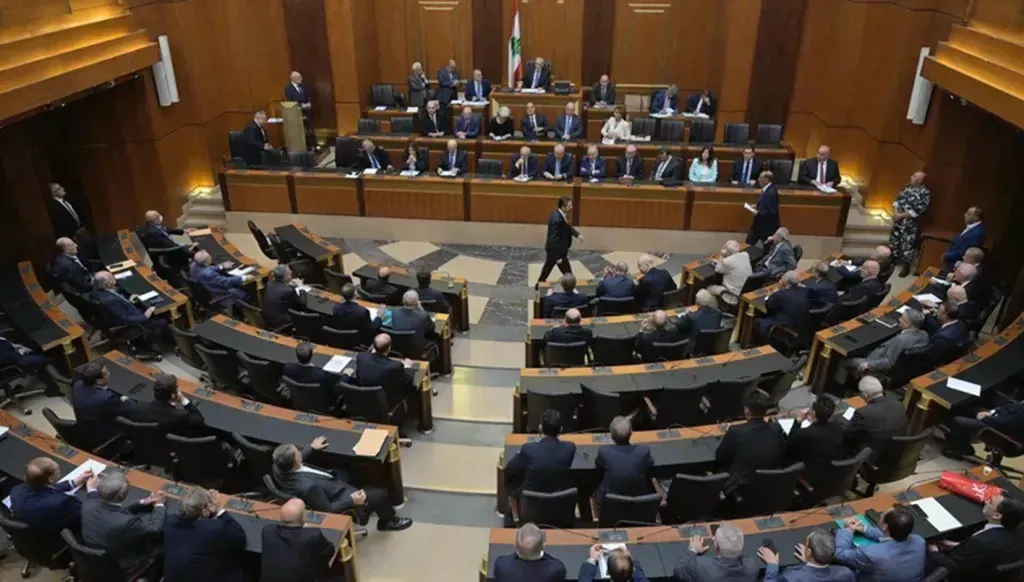


Lebanon’s Parliament begins today the discussion of the draft general budget law, following a call by its Speaker Nabih Berri (the Speaker of Parliament), within a program of intensive sessions spanning three days. This reflects a clear intent to complete and approve the draft for two reasons. The first is adherence to the constitutional deadlines, which expire at the end of the current month. The second is pressure to begin studying the draft law on financial regularization (the financial gap) after it is referred to Parliament, as Berri cannot send it to the Finance Committee before the budget draft is completed. Accordingly, the General Assembly starts debating the budget today amid expectations that the differences and divergences that emerged within the Finance Committee will be reflected in the public sessions, especially since they will be televised, which is likely to fuel MPs’ appetite for speeches and populist rhetoric during a clearly electoral season.
By last evening, fifty MPs had registered to speak, and the number is expected to rise, particularly since the draft itself encourages such debate. It is operational in nature and lacks any vision or direction for the coming phase, and it is not linked to the financial gap draft law approved by the government, under which the government and the central bank together assumed about 85 percent of the losses. This issue was not addressed in the budget draft, despite the debt it entails for the treasury, which should have been reflected in it.
The committee introduced around 15 amendments to the draft, which can be summarized as canceling proposed new tax provisions and limiting increases in certain fees to exchange rate differences. Additional allocations were also included, amounting to 4,500 billion Lebanese pounds for the Ministry of Health for hospitalization and cancer medications, and 1,500 billion Lebanese pounds for the Ministry of Education for the teachers’ fund. An amount of 386 billion Lebanese pounds was allocated to the Ministry of Environment for joint projects with municipalities, and 1,000 billion Lebanese pounds to strengthen the Civil Defense budget, in addition to boosting the budgets of the army and security agencies to cover deployment, equipment, and medical costs.
The amendments also included increasing allocations for oversight bodies, suspending high rental contracts, settling dues owed to primary healthcare centers, auditing support to non-governmental organizations, and halting funding for ineffective institutions. Funds were allocated for major road projects, governorate budgets were reinforced, and 961 billion Lebanese pounds were earmarked for the Lebanese University, covering pensions, debt repayment, and building maintenance.
The declared positions of parliamentary blocs on the eve of the session showed clear divergence that is expected to be reflected in the vote once the draft reaches the General Assembly. Some blocs tend toward approval or participation in passing it, while others have expressed remarks that are expected to surface during the General Assembly debates.
Although the blocs inclined to approve have not announced a final and official position in advance, citing the need to await the final wording after amendments, they tend not to obstruct the debate and to support passing the budget following the Finance Committee’s amendments.
Notably, the Democratic Gathering bloc stated through MP Hadi Abou Al Hassan that the budget is the best possible option, even though it is not reformist to the required extent. Overall, it is operational in nature, but the bloc will not oppose its approval in Parliament.
As for the two-bloc alliance, namely Loyalty to the Resistance and Liberation and Development, their position is clear in supporting the draft in order to secure a quorum, without ruling out the registration of a number of remarks. They justify their stance as stemming from their concern for legislative stability.
The Strong Republic bloc did not conceal its remarks on the draft or its objections to the course of the budget discussions in the Finance and Budget Committee, considering that there were oversteps in inserting articles and revenues without precise justification. It had previously criticized the manner of debate, particularly with regard to the funds’ money, reserves, last-minute budget riders added without proper scrutiny, distribution mechanisms, and other issues. However, its sources confirmed that the objections relate to the draft itself and are not linked to the electoral law that the bloc is calling to be put before the General Assembly, stemming from its commitment to legislative work and not obstructing it.
There will not be an outright rejection of the budget itself, but the bloc’s position and vote will depend on the extent to which its remarks are addressed and incorporated into the draft.
As for the Kataeb bloc, which represents the Kataeb (Phalange) Party, its sources explained that it had not reviewed the draft in advance because it is not represented in the Finance and Budget Committee. It will have remarks, but it is unlikely to abstain from voting.
The Strong Lebanon bloc will view the budget debate as an opportunity to raise the level of its criticism of the government and the presidency in general, by elevating expectations and ambitions, especially since the budget lacks any reform vision or financial sovereignty and fully submits to external pressures.
Regarding independent and reformist MPs, positions vary and will be shaped by electoral rhetoric, amid a sense among some of them that they may lose their seats in the upcoming parliamentary elections.
Some of them have expressed general reservations about the budget and the method of debating it, particularly the absence of fundamental reforms or tax justice, but no clear position has yet emerged pending the discussion sessions.
In any case, regardless of the high tone MPs may adopt in their speeches, it will not go beyond objection. Passing the budget is urgent and required both internally and externally, regardless of the number of votes the draft receives. The real battle is not over the budget, but over the financial gap law once it reaches the General Assembly.
Disclaimer: The opinions expressed by the writers are their own and do not necessarily represent the views of Annahar